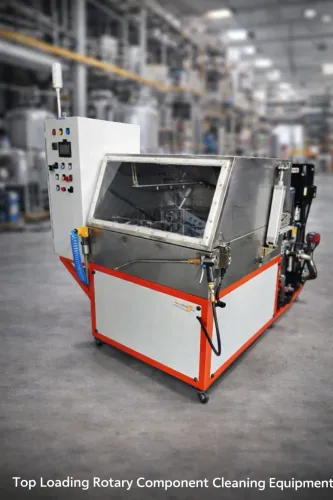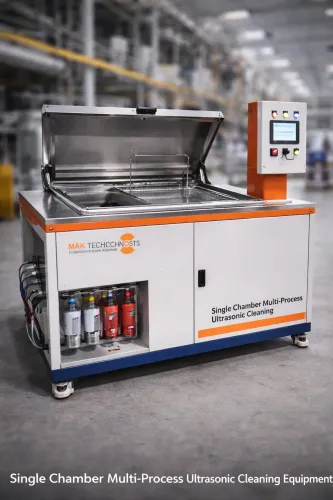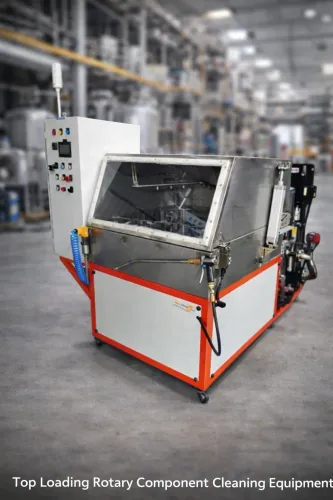
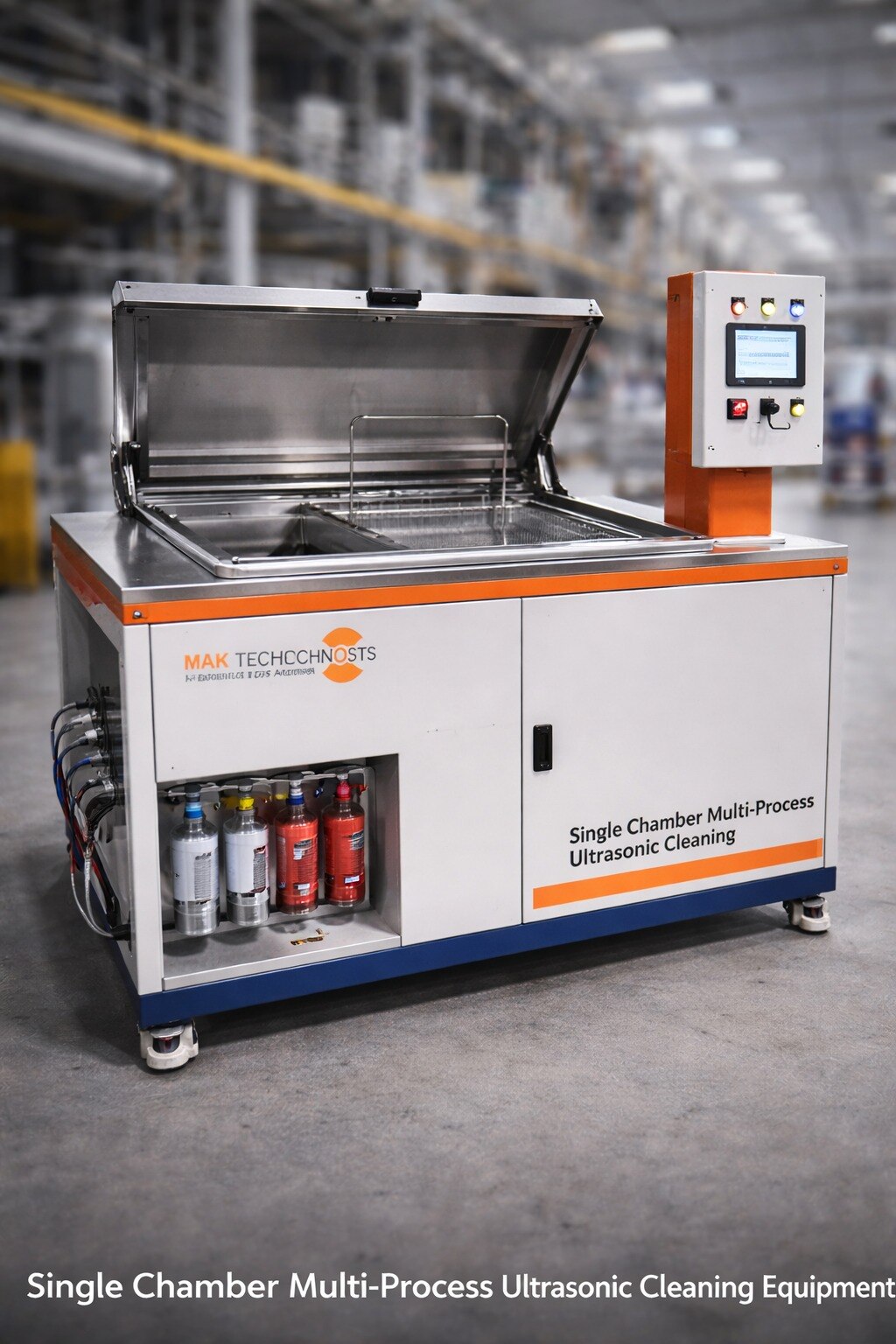
The investment only makes sense when repeatable cleaning, labour savings and avoided rework outweigh the full cost of the installed process. You will be able to compare single- and multi-chamber layouts, match cleaning stages to your parts and contamination, and calculate a site-specific payback before requesting quotations.
Key takeaways
- Choose a multi-chamber line for repeatable high-volume sequences.
- Use a single chamber when volumes, parts, or recipes change frequently.
- Test cavitation, chemistry, temperature, and drying on your actual parts.
- Calculate payback from labour, cycle time, rejects, utilities, and maintenance.
What does multi-process ultrasonic equipment actually combine?
Multi-process ultrasonic cleaning equipment is defined by its process sequence, not its tank count. A recipe can run prewash, ultrasonic cleaning, one or more rinses, passivation, and hot-air or vacuum drying; vapor degreasing can be included as a solvent stage where the part and compliance controls permit it. A single chamber runs these cycles sequentially.
A multi chamber ultrasonic cleaner transfers baskets between dedicated chambers, allowing separate chemistries and rinse zones.
| Configuration | How it works | Main consequence |
|---|---|---|
| Single chamber | One chamber performs sequential stages | Lower footprint and flexible batches, but longer cycle and no simultaneous chemistries |
| Multi-chamber line | Baskets transfer between dedicated tanks | Higher throughput and segregation, but more pumps, sensors, transfers and maintenance |
| Hybrid sequence | Aqueous cleaning combines with passivation, drying or vapor degreasing | Requires chemistry compatibility, exhaust and corrosion-control validation |
Request a chamber-by-chamber process diagram identifying which tanks have transducers, filtration, overflow, spray, agitation and temperature control. The chamber count alone does not prove every stage is ultrasonic.
The ultrasonic cleaning equipment benefits are controlled time and temperature, fewer manual transfers, repeatable recipes and separated rinses. Overloaded baskets, shared dirty and clean handling, poor overflow control or weak filtration erase those gains by carrying soil into later stages. Include transfer-jam recovery, filter access and alarms in the specification.
When is a single chamber better than a multi-chamber line?
A single chamber is the better choice when volumes are low or variable, products change frequently, and recipes do not need concurrent stages. It occupies less floor space, costs less to install, accepts mixed batch sizes, and changes over faster, but loading, unloading and manual transfers limit throughput and increase cross-contamination risk.
| Option | Where it wins | Where it loses |
|---|---|---|
| Manual solvent wiping | Low floor space and flexible parts | Slow, residue-prone, operator exposure, poor repeatability |
| Immersion tank | Low capital cost and simple batches | Manual handling, weak residue control, limited throughput |
| Spray washer | Fast external cleaning | Poor blind-hole cleaning and larger footprint |
| Standalone ultrasonic tank | Flexible, compact, repeatable cycles | One chemistry at a time and manual rinsing |
| Seven-tank line | High throughput and segregated wet stages | High capital, floor space, changeover and maintenance |
| Vapor degreasing | Strong oil removal and low drying load | Solvent safety, emissions and chemistry limitations |
| Outsourced cleaning | No equipment or floor-space burden | Transport delay, less control and variable turnaround |
Dedicated chambers justify their larger installation when volume is stable, takt time is short, several wet stages run together, and dirty and final-rinse zones must remain separate. Reduced manual transfers also lower handling labour and carryover; simultaneous chemistries improve throughput.
To decide whether is multi process ultrasonic cleaning equipment worth it in Pune, record:
- Batch volume and takt time
- Cleaning labour hours and cost
- Rejection and rework cost
- Cleanliness specification
- Existing cleaning steps
- Required changeover time and available floor space
Choose multi process ultrasonic cleaning equipment when those figures support automation; otherwise choose a flexible single tank or outsourcing.
Will the process clean your part without damaging it?
1. Cavitation forms bubbles that collapse against the part, loosening soil. Frequency, acoustic power, tank volume, temperature, detergent concentration, degassing, loading and cycle time interact: low frequency is more aggressive, while higher frequency suits fine contamination and delicate surfaces.
More power or heat is not automatically safer; they can erode coatings, attack elastomers, accelerate corrosion or redistribute oil. Demand wattage stated as generator input or transducer output, per tank volume, with frequency and measured acoustic conditions.
2. Run acceptance trials using production geometry, proposed chemistry, basket loading and exposure time. Blind holes and fine bores may need rotation or directed agitation; threaded holes and mesh need fluid exchange. Use pressure rinsing for chips and particulate, and vacuum drying for trapped fluid, joints, capillaries and water-retaining geometries.
Protect delicate coatings, elastomers and dissimilar metals through compatibility tests and corrosion control.
3. Match the sequence to the soil. Use an appropriate alkaline or compatible detergent stage for machining oil and coolant; filtration and rinsing for chips; binder-specific trials for polishing compound, carbon residue and wax; controlled rinsing plus a measurable ionic-residue test for salts. One detergent or solvent cannot safely remove every soil.
4. Specify bath degassing before critical cleaning, oil skimming or filtration, filter ratings, bath replacement limits and drying temperature or vacuum. A multi chamber ultrasonic cleaner delivers ultrasonic cleaning equipment benefits only when loading avoids contact, dirty and clean handling remain separated, and each stage’s chemistry, overflow and filtration are controlled.
How do you calculate the installed cost and payback?
Start with a worksheet, not the quotation. To decide whether multi process ultrasonic cleaning equipment is worth it in Pune, compare the complete installed cell with your current method using actual plant figures.
- Record equipment, baskets, loading fixtures, installation, electrical supply, compressed air, water, heating, exhaust or fume extraction, chemical consumption, filtration, oil removal, wastewater treatment or solvent recovery, operator time, preventive maintenance, spare parts, validation and production downtime.
- Calculate annual benefits from avoided labour, higher output, lower chemical handling, fewer rejects and less rework.
- Subtract annual utilities, chemicals, filter media, maintenance, compliance and validation costs from those benefits.
- Calculate payback as net investment divided by annual net benefit. Do not use a supplier’s claimed period before entering your own volumes, wages, reject cost and utility rates.
Require a factory acceptance test using production parts or representative coupons, a defined soil loading and an agreed measurement: ISO 16232-based particle extraction where applicable, gravimetric residue, microscopy, water-break testing or a functional contamination test. Visual appearance cannot prove removal of sub-visible particles or ionic residue.
For an industrial ultrasonic cleaning machine in Pune, ask every supplier for measured utility loads, test results and lifecycle costs. Include Mak Technosys in the comparison, but accept the proposal only when its performance evidence covers your parts, chemistry and loading pattern.
Related products
 | Ultrasonic Cleaning Equipment Single Chamber Multi-Process Ultrasonic Cleaning Equipment Single Chamber Multi-Process Ultrasonic Cleaning Equipment in Pune In today’s precision-driven manufacturing environment, maintaining component... View product → |
 | Ultrasonic Cleaning Equipment Multi Chamber Multi-Process Ultrasonic Cleaning Equipment Multi Chamber Multi-Process Ultrasonic Cleaning Equipment in Pune. View product → |
What must Pune manufacturers verify before approving the purchase?
Approve an industrial ultrasonic cleaning machine in Pune only after the supplier proves the complete installed process, not just tank capacity. The ultrasonic cleaning equipment benefits disappear when transfer jams, restricted filters, poor rinsing or overloaded baskets create rework.
| Option | Go signal | No-go signal |
|---|---|---|
| Multi-chamber automation | Stable volume, several wet stages, costly handling or rework, measurable cleanliness target | Low volume, constant part changes, or compliance and drying costs erase the gain |
| Flexible single tank | Variable batches and documented recipes cover the required sequence | Concurrent chemistries, segregation or takt time require dedicated chambers |
| Outsourcing | Cleaning demand is occasional and supplier traceability is acceptable | Transport, lead time or cleanliness risk exceeds the saving |
Require these documents and inspections:
- Recipes showing chamber temperatures, ultrasonic frequency and power basis, loading limits, degas cycle, filtration rating and flow, overflow rates, rinse quality, drying temperature or vacuum level, alarms, recipe interlocks and traceability.
- Access for tank cleaning and filter changes; recovery instructions after a transfer jam or power failure; spare-parts availability and preventive-maintenance instructions.
- Compatibility evidence for metals, plastics, elastomers, coatings, and the selected detergent or solvent.
- Screen industrial effluent, hazardous chemical use and air emissions against the Maharashtra Pollution Control Board consent process and existing site consent conditions.
Choose automation only when the installed-cost case is positive. Otherwise choose a flexible tank, outsourced cleaning or another alternative.
Frequently asked questions
What does multi-process ultrasonic equipment combine?
It combines programmed stages such as prewash, ultrasonic cleaning, rinsing, passivation, and hot-air or vacuum drying. Vapor degreasing can be added when the solvent, part material, and compliance controls permit it.
When is a single chamber better than a multi-chamber ultrasonic cleaner?
A single chamber suits lower volumes, frequent recipe changes, large part variation, or sequential processing that does not justify dedicated tanks and transfer automation.
Can ultrasonic cleaning damage a part?
It can if the frequency, power density, chemistry, temperature, exposure time, or fixture causes damage. Test the actual part and inspect coatings, edges, threads, seals, and dimensional surfaces.
How do you calculate the installed cost and payback?
Include equipment, tanks, automation, ventilation, utilities, installation, chemicals, filtration, wastewater handling, maintenance, and operator training. Compare that total with labour savings, higher throughput, reduced rejects, lower rework, and avoided cleaning costs.
What should Pune manufacturers verify before approving an ultrasonic cleaning system?
Verify a documented cleaning trial, cycle time, loading method, basket capacity, drying result, utility demand, maintenance access, effluent and solvent controls, safety interlocks, warranty scope, and local service support.