Oil enters bearing-production fluids from machine-tool ways, hydraulic systems, slideways, quenching operations, dirty return coolant, and machining debris. By identifying the fluid, separating free oil from emulsified contamination, and matching the skimmer to tank geometry and chemistry, you can specify a system that removes oil without compromising bearing cleanliness.
Key takeaways
- Trace tramp oil to its source before selecting a skimmer.
- Match the skimmer belt and material to the tank and oil phase.
- Size capacity for oil loading, fluid temperature, viscosity, and operating hours.
- Verify cleaner performance with documented bearing cleanliness results.
Trace the oil source before choosing a skimmer
Start by tracing what enters the liquid before selecting oil skimmers for automotive bearing manufacturing. Tramp oil can come from machine-tool ways, hydraulic systems, slideways, quenching operations, or contaminated return coolant. The target liquid determines whether bearing manufacturing oil removal is suitable for a skimmer.
- Identify the incoming contamination at each connected machine, return line, overflow, and transfer point.
- Record fluid temperature, pH, concentration, turnover rate, tank dimensions, liquid depth, and the time needed for oil to form a visible surface layer.
| Target liquid | Check before choosing | Skimmer relevance |
|---|---|---|
| Water-miscible cutting or grinding-fluid sump | Concentration, emulsion stability, and free-oil layer | Removes separated tramp oil |
| Straight-oil bath | Oil viscosity, temperature, and circulation | Treats floating or separated oil at the surface |
| Alkaline wash tank | Cleaner strength, heat, and oil redeposition | Removes free oil, not cleaning chemistry |
| Wastewater tank | Solids, detergents, and discharge requirements | Works only on a distinct floating oil phase |
| Rust-preventive oil tank | Oil type, viscosity, and tank access | Confirm the recovered oil can drain |
| Quench system | Temperature, agitation, and oil loading | Requires heat- and chemistry-compatible components |
A skimmer removes free-floating oil, not stable coolant emulsion, dissolved oil, metal fines, sludge, or cleaning chemistry. If the fluid stays cloudy because oil is chemically or mechanically emulsified, investigate concentration control, coalescence, centrifugation, membrane separation, or fluid replacement instead.
In a water-based bearing washer, removing free oil can reduce redeposition on rings and rolling elements. It does not replace control of cleaner concentration, rinse quality, temperature, or final drying.
Match the skimmer design to the tank and oil phase
Choose the skimmer geometry around tank access, liquid depth, oil viscosity, and the thickness of the free-oil layer. A belt skimmer needs vertical clearance for its loop and a calm surface; it performs best when oil gathers as a continuous layer rather than scattered droplets.
| Design | Access and depth | Oil phase and limits |
|---|---|---|
| Belt | Open tank with clearance for a vertical loop | Continuous free oil; strong pickup from a stable layer, but immersion controls water carryover |
| Tube | Restricted access, shallow or narrow sump | Floating oil must contact the tube; useful where a belt cannot fit |
| Disc | Accessible tank with room for a rotating disc | Defined oil pocket; solids can foul the disc or scraper |
| Drum | Accessible tank with clearance for a rotating drum | Defined oil pocket; suit the drum to viscosity and discharge drainage |
| Mop-style | Awkward corners, remote pockets, or obstructed tanks | Oleophilic rope reaches the layer; inspect the mop and wringer for wear and plugging |
High-viscosity oil adheres well but drains slowly, so check the scraper and collection tray. Light oil can increase water carryover. Stable emulsified oil is not a reason to select a more powerful oil skimmer; change chemistry or use separation equipment instead.
Check grinding swarf, steel fines, lapping abrasive, and sludge before selecting any belt oil skimmer. Settling, a coarse strainer, or a separate solids-removal stage protects belts, scrapers, discharge chutes, discs, and mops from fouling.
Specify how a belt oil skimmer will operate in the washer
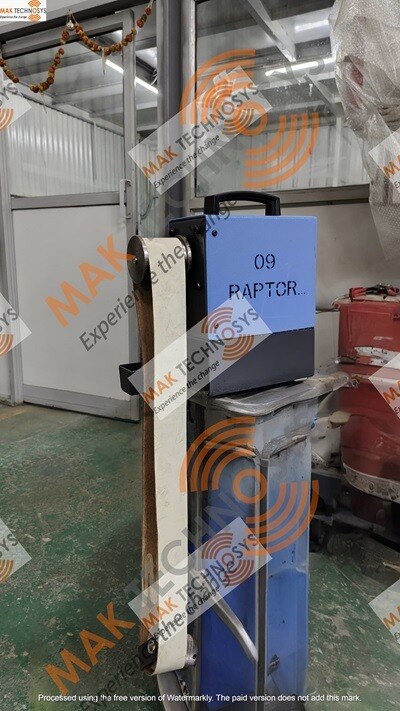
Ask the supplier to show the complete belt path in the washer, not only motor power or nominal capacity. An oleophilic belt travels through the free-oil layer, lifts adhered oil above the liquid, and passes a scraper or wiper that directs the recovered phase into a collection tray.
Include these details on the layout drawing:
- Belt material, belt width, travel speed, and joint construction
- Scraper material and contact arrangement
- Immersion depth and mounting height
- Tray slope, outlet size, and drain connection
Keep the belt in the floating oil layer. Excessive immersion increases water carryover; insufficient immersion reduces pickup. For bearing manufacturing oil removal, install the belt skimmer in a calm reservoir, dirty-tank overflow, or oil-collection pocket, not inside a high-turbulence spray zone.
Spray action and pump return flow disperse tramp oil, reducing the layer available for pickup.
Provide a drainable collection vessel sized for the expected oil-and-water mixture, an overflow safeguard, and a sight glass or inspection opening for checking the recovered phase. Without these features, a belt oil skimmer can transfer contaminated washer fluid into an uncontrolled waste container.
Judge recovery by the thickness and continuity of the free-oil layer, fluid temperature, viscosity, and water carryover—not by belt speed or the word continuous in a catalogue. A fast belt cannot collect oil that turbulence has dispersed.
Size the system from oil loading and operating conditions
Calculate the practical removal requirement from the process, not the catalogue rating. Measure tank length, width, liquid depth, surface area, oil-layer thickness, oil accumulation per shift or day, operating hours, and the interval before emptying the collection vessel.
| Input | Use in sizing | Record |
|---|---|---|
| Tank dimensions and depth | Establish surface area and available mounting space | Length, width, liquid depth |
| Oil loading | Calculate removal needed per hour or shift | Litres per shift or day |
| Operating schedule | Set required recovery frequency | Hours per day and vessel-emptying interval |
| Process conditions | Select a tested recovery rate | Temperature range and tramp-oil viscosity |
Compare that calculated requirement with the supplier’s tested recovery rate at the actual temperature and viscosity. A quoted litres-per-hour capacity is not the oil that will leave a bearing-cleaning bath: water carryover, excessive belt immersion, turbulence, viscosity, and a thin or intermittent free-oil layer reduce usable output.
Record pH, alkaline-cleaner concentration, cutting-fluid chemistry, solvent content, and electrical supply. Request compatibility evidence for the belt, seals, scraper, motor, tray, and container, covering swelling, embrittlement, softening, belt-joint durability, and scraper wear.
Test the actual oil mixture at process temperature; an oleophilic belt suitable for neat cutting oil can fail in hot alkaline or solvent-containing cleaner.
Confirm mounting space, belt-replacement access, guarding, washdown requirements, and collection-vessel drainage and overflow protection. Check whether the recovered stream is hazardous or requires separate disposal before selecting oil skimmers for automotive bearing manufacturing or a belt oil skimmer.
Connect skimmer performance to bearing cleanliness results
Judge oil skimmers for automotive bearing manufacturing by measured cleanliness, not a clear-looking bath. A sample plan must link bearing manufacturing oil removal to component results and record free-oil accumulation, bath temperature, chemistry, skimmer runtime, recovered volume, water carryover, and filter or strainer loading.
1. Validate the installation with fluid samples and component extractions. ISO 16232 provides methods for extracting, analysing, and reporting particulate cleanliness in road-vehicle components and systems; use those results to confirm that oil control supports the required bearing cleanliness level.
2. Use ISO 4406 only for its intended measurement: particle-count codes in specified size classes for circulating hydraulic or process fluids. It measures suspended particles, not free oil, so an ISO 4406 result cannot serve as the sole skimmer acceptance test.
3. Add magnetic separation or suitable filtration when ferrous fines circulate. An oil skimmer removes a concentrated free-oil phase; filtration addresses suspended particles, while grinding swarf, steel fines, and sludge can overload a belt, scraper, or discharge chute.
4. Require each supplier to review tank geometry, chemistry, temperature, solids loading, discharge handling, and test results. Include Mak Technosys in that comparison only after its industrial oil-removal and filtration equipment is checked against the actual bearing-line process sheet and safety data sheet, rather than a generic catalogue rating.
Related product
 | Belt Skimmer Manufacturer in Pune A Belt Skimmer is an efficient and cost-effective solution for removing floating oils, grease, and fats from coolant tanks,... View product → |
Frequently asked questions
What oil sources should you trace before choosing an oil skimmer?
Check machine-tool ways, hydraulic systems, slideways, quenching operations, and contaminated return coolant. Identify which source enters the washer and how much oil it adds.
How do you match a skimmer design to a washer tank?
Check tank depth, available mounting space, fluid level, access points, agitation, and whether the oil forms a floating layer or an emulsion. Select a belt skimmer when the oil separates at the surface and the belt can reach that layer.
What operating details should you specify for a belt oil skimmer?
Specify belt material and width, belt speed, scraper arrangement, discharge location, operating schedule, fluid temperature, and the controls needed to prevent dry running or interference with the washer.
How should you size an oil skimmer for bearing manufacturing?
Base capacity on the measured oil inflow and required operating hours, then account for oil viscosity, fluid temperature, tank geometry, belt pickup, and collection-container volume.
How can oil-skimmer performance affect bearing cleanliness?
Relate oil removal to washer concentration, bath life, residue, and measured bearing cleanliness. Record oil collected, operating conditions, cleaning results, and inspection data for each production batch.