A seven-tank line is a sequence of treatment stages, not a guaranteed cleaning specification. You will be able to map each tank to a bearing-refurbishment task, choose between aqueous cleaning and vapor degreasing, and compare machines using measurable process, handling, fluid-management, and acceptance controls.
Key takeaways
- Match each tank to the bearing’s soil, metallurgy, seals, and post-cleaning lubricant.
- Use controlled temperature, concentration, filtration, and rinse quality for repeatable cleaning.
- Prevent flash rust with prompt drying and a compatible corrosion inhibitor.
- Demand bath-control records and cleanliness evidence before comparing machine quotations.
What each of the seven tanks does in a bearing-refurbishing line
A “seven tank process” means seven treatment stages, not one universal machine layout. The seven tank process for bearing refurbishing must follow incoming soil, bearing metallurgy, seal condition, and the lubricant applied after cleaning.
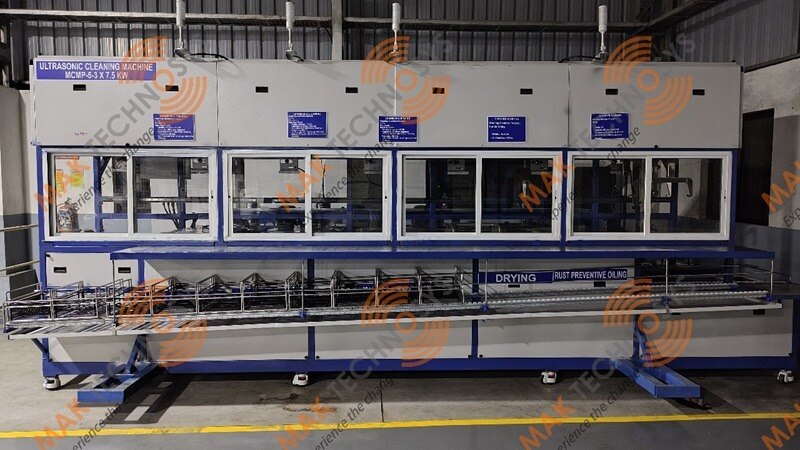
- Tank 1 handles loading and prewash or pre-degreasing. Remove loose abrasive dust, chips, and heavy grease before finer cleaning.
- Tank 2 provides a heated aqueous wash. Its detergent attacks oil, grease, carbonised deposits, and water-soluble salts.
- Tank 3 uses ultrasonic energy to loosen packed grease, raceway residue, cage-pocket contamination, and fine abrasive dust that brushing or spray alone can leave behind.
- Tank 4 is the first intermediate rinse. It removes bulk detergent from races, rollers, and cages.
- Tank 5 is a separate second rinse. It reduces chemical carryover before the final water stage; combining both rinses can return detergent to clean parts.
- Tank 6 uses demineralized or low-conductivity water for the final rinse, followed by corrosion-inhibitor treatment where one tank combines those functions.
- Tank 7 dries the parts with hot air, air knives, vacuum, or a combination. Dry cage pockets, rollers, and raceway corners before flash corrosion starts.
The line normally handles disassembled races, rollers, cages, shields, and seals. Complete sealed or shielded bearings are poor candidates when chemistry can become trapped or cleaning can remove grease without inspection access.
For 7 tank process cleaning machines for bearing refurbishers in Pune, specify the sequence from the actual bearing and lubricant—not from the tank count.
When aqueous seven-tank cleaning is the right choice for a bearing
Choose aqueous cleaning when the bearing carries mixed contamination rather than oil alone. Alkaline water-based chemistry removes grease, carbonised oil, abrasive dust, chips, and water-soluble salts, making it suitable for refurbishment before inspection and relubrication.
| Option | Cleaning strength | Process consequences |
|---|---|---|
| Aqueous seven-tank line | Removes mixed soils and separates particles through washing and rinsing | Requires bath control, multiple rinses, heated drying, wastewater handling, and flash-rust prevention |
| Solvent vapor degreasing | Strong for oil and grease, with rapid drying and little water carryover | Requires controls for solvent exposure, fire or flammability risk, emissions, and material compatibility; it is weaker for salts and loose abrasive debris |
Use a 7 tank cleaning machine for bearings only after checking:
- Open or sealed construction, and whether shields or seals can be removed
- Cage material, bearing steel, aluminium or zinc-plated parts, and existing corrosion
- Lubricant type, bearing dimensions, and the amount of packed grease
- Whether the bearing will be relubricated immediately after cleaning
Excessive alkalinity, temperature, or exposure time can stain steel, attack aluminium or zinc plating, and damage elastomeric seals. A sealed bearing can also trap chemistry or lose its original lubricant without allowing inspection.
Base the decision on a cleaning trial using representative bearings, actual soils, and the intended lubricant. The seven tank process for bearing refurbishing must pass inspection and drying checks; the word “ultrasonic” and the number of tanks do not prove suitability.
Which operating controls protect the bearing and make cleaning repeatable
Record and validate detergent concentration, bath pH, wash and rinse temperatures, immersion time, spray pressure, ultrasonic frequency and power, tank loading, degassing, and fluid circulation. A 7 tank cleaning machine for bearings is repeatable only when these values appear in the batch record, not just on the equipment quotation.
| Frequency | Cavitation context | Decision |
|---|---|---|
| 25–30 kHz | Larger, more aggressive bubbles | Use for robust parts and heavy soil |
| 30–40 kHz | Finer cavitation | Suit smaller or more delicate components |
| Any frequency | Does not prove cleaning performance | Validate with loading, chemistry, temperature, and residue checks |
Specify ultrasonic power density in watts per litre or square metre, basket loading by mass and arrangement, and the nominal tank volume. Overloading shields raceways from cavitation, weakens rinsing, and leaves uneven drying. Degas fresh solution before production and confirm circulation reaches blind features.
- Use baskets with drainage openings that do not mark precision surfaces; prevent impact loading.
- Separate rollers, races, and cages so they cannot rub or strike one another.
- Never rotate a contaminated bearing at high speed to force cleaning.
- Set air temperature and residence time below the limits for seals, cages, inhibitor films, hardness, and dimensional stability.
A tank cleaning machine in Pune should be trialled with representative bearings and soils. Cleaning cannot replace inspection for pitting, scoring, cracks, cage damage, or altered geometry.
How to control baths, prevent flash rust, and prove cleanliness
A seven tank process for bearing refurbishing stays effective only when each bath has an owner, a control limit, and a recorded change interval. A skimmer removes floating free oil; it does not remove emulsified oil, dissolved contamination, or suspended solids.
1. Check bath condition each shift. Use a coarse prefilter before a finer filter, selecting ratings and flow for the target particle size and pump capacity. Remove settled sludge, control oil carryover between tanks, check detergent concentration and pH, and replace baths at documented limits.
Use coalescence or bath replacement for stable emulsions and dissolved contamination.
2. Keep rinses separate and overflowing in the intended direction. The first rinse removes bulk detergent; later rinses reduce chemical carryover. Use final demineralized or low-conductivity water to reduce spotting, but validate its conductivity limit against the bearing material, inhibitor, drying method, and cleanliness specification.
3. Prevent flash rust with a compatible inhibitor, heated air or vacuum drying, and immediate oiling when the post-cleaning specification requires it. Record rinse temperature, drying temperature, residence time, and bath or rinse conductivity.
4. Verify each batch under controlled light, with a white-wipe inspection, water-break check, rinse-water appearance check, particle inspection, and gravimetric residue test when specified.
5. Write pass/fail limits tied to the refurbishment standard. “Looks clean” is not an acceptance criterion; define allowable residue, particles, water-break behavior, conductivity, and corrosion before production starts.
What to specify when comparing a seven-tank machine in Pune
Specify the largest bearing and batch before discussing tank volume. A tank cleaning machine in Pune needs tank and basket dimensions that leave clearance for circulation, drainage, and ultrasonic-field distribution; an overloaded basket shields parts, weakens rinsing, and leaves raceway corners wet.
1. Record heated wash and rinse temperature controls, ultrasonic frequency, power density, degassing, spray pressure where used, filtration flow and filter ratings, floating-oil removal, sludge removal, detergent dosing, and concentration monitoring.
2. Define the final-rinse water by hardness, dissolved solids, chlorides, conductivity, and seasonal variation in Pune. Test incoming water before choosing demineralized water, detergent concentration, and inhibitor compatibility; untreated supply water can cause scale, spotting, and flash rust.
3. Specify drying temperature, residence time, airflow, air knives, or vacuum capability. Require evidence that the basket keeps races, rollers, and cages separated and that drying reaches cage pockets, rollers, and raceway corners without harming seals, cages, inhibitor films, hardness, or dimensions.
4. Require guarding, chemical compatibility, accessible drains, wastewater connections, and sludge provisions. Ask for a trial report using your actual bearings, grease, carbonised oil, abrasive dust, and chips, with cleanliness and dryness pass/fail results.
For 7 tank process cleaning machines for bearing refurbishers in Pune, Mak Technosys becomes relevant when the supplier must match seven stages to bearing size, throughput, chemistry, drying, and fluid management—not treat “seven tanks” as a complete specification.
Related products
 | 7 Tank Cleaning Machine Mak Technosys operates as a leading Tank Cleaning Machine Manufacturers, Suppliers, and Exporters in Pune. View product → |
 | Ultrasonic Bearing Cleaning & Vapor Degreasing Equipment Ultrasonic Bearing Cleaning & Vapor Degreasing Equipment Advanced Cleaning Solutions for Precision Component Introducing our cutting-edge Ultrasonic Bearing Cleaning & Vapor Degreasing Machine, meticulously... View product → |
Frequently asked questions
What does each tank do in a seven-tank bearing-refurbishing line?
Each tank performs one defined treatment, such as pre-cleaning, aqueous washing, rinsing, corrosion protection, or drying. The exact sequence must match the incoming soil, bearing materials, seal condition, and lubricant applied after cleaning.
When is a seven-tank aqueous process right for bearing refurbishment?
Choose it when bearings need repeatable removal of grease, oil, particulate soil, and process residue at production scale. Check seal compatibility and drying requirements before selecting aqueous cleaning.
Which controls make seven-tank bearing cleaning repeatable?
Control bath temperature, cleaner concentration, immersion or spray time, agitation, filtration, rinse quality, drying temperature, and corrosion-inhibitor concentration. Record each control against the batch.
How do you compare a seven-tank cleaning machine in Pune?
Compare the tank sequence, working volume, heating and filtration capacity, transfer method, drying performance, safety provisions, bath-monitoring records, and evidence used to verify cleanliness.
Related products
 | Top Loading Rotary Component Cleaning Equipment Top Loading Rotary Component Cleaning Equipment Efficient Cleaning Solutions for Industrial Components Welcome to the future of industrial component cleaning with our innovative Top Loading Rotary... View product → |
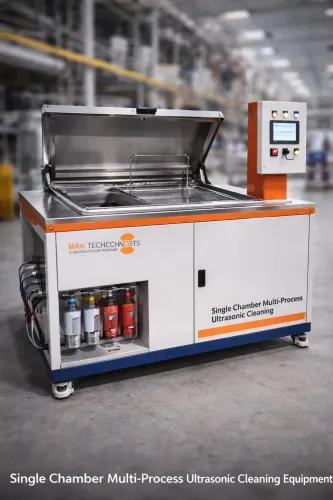
 | Ultrasonic Cleaning Equipment Single Chamber Multi-Process Ultrasonic Cleaning Equipment Single Chamber Multi-Process Ultrasonic Cleaning Equipment in Pune In today’s precision-driven manufacturing environment, maintaining component... View product → |