
Oil carryover can rise even when a filter gauge shows normal pressure, because the contamination may be emulsified, bypassing the element, released from dead legs, or trapped inside vertical tube assemblies. You will learn how to identify the failure mode, trace oil through the full circuit, choose filtration by actual process conditions, and recover circulation and tube cleanliness in the correct order.
Key takeaways
- Rising differential pressure with falling flow indicates a loaded filter element.
- Test whether oil is floating, dispersed, or emulsified before selecting filtration.
- Inspect the pump, bypass, return, drain, and separator—not only the filter.
- Prove recovery by recording pressure, flow, temperature, and oil carryover together.
Start with the symptom: what do pressure, flow, and oil carryover reveal?
Read pressure, flow, and oil carryover together: their pattern separates a loaded filter from a blocked line, weak pump, bypass leak, or oil-separation failure. Rising differential pressure across the element with falling flow indicates loading.
A normal filter differential pressure with low circulation points upstream or downstream of the housing, not automatically to a clean filter.
Use these patterns for vertical tube filtration troubleshooting:
- Loaded filter: differential pressure climbs steadily, flow declines, and cleaning variation increases across the tube bundle. Remove and inspect the element; do not judge condition from pressure at one gauge.
- Blocked suction strainer or line: filter differential pressure stays normal while pump inlet pressure falls, flow drops, and cavitation produces noise, foam, or unstable discharge pressure. Check the strainer and valves before blaming the pump.
- Pump problem: low flow persists with clear suction, open valves, and little differential pressure across the filter. Check rotation, coupling, impeller wear, seals, and air entry.
- Bypass leak: circulation looks normal but oil carryover remains high, especially when the bypass valve should be closed. Test valve seating and compare samples with the bypass isolated.
- Oil-separation failure: pressure and flow remain acceptable, yet free oil, cloudy liquid, or oil in post-cleaning drain samples persists. A clean filter reading proves resistance is low; it does not prove oil removal.
Dead legs can release an oil-and-solids slug after restart, creating tube cleaning filtration problems downstream of the filter. Trace returns and low points before replacing media.
Determine whether the oil is floating, dispersed, or emulsified
A skimmer removes a floating free-oil layer; a standard particulate filter does not reliably remove liquid oil droplets dispersed through the bath. Identify the form before changing filter media, or an oil filtration system for tube cleaning will collect solids while oil carryover continues.
| Form | What you see | Suitable response |
|---|---|---|
| Floating free oil | Distinct surface sheen or layer that separates in a jar | Surface skimmer; remove the layer gently |
| Dispersed oil | Visible droplets or haze that settle slowly | Coalescer, adequate residence time, and controlled flow |
| Emulsified oil | Uniform cloudy or milky bath that does not separate after settling | Demulsification, chemistry control, or bath replacement |
Fill a clear jar with bath fluid and let it stand. A separate top layer indicates free oil; floating droplets or gradual clearing indicate dispersion; persistent uniform cloudiness indicates an emulsion.
A skimmer placed in return turbulence can pull cleaning solution with a thin oil layer, so reduce draw and check the recovered liquid for cleaner loss.
Recover control in this order: remove free oil, restore circulation and temperature, then treat the remaining form. Heating can lower viscosity and improve coalescence, but excessive temperature can increase soil release, foaming, evaporation, or emulsion formation. Replace the bath when chemistry cannot break the emulsion, contamination returns immediately, or oil concentration overwhelms separation capacity.
These checks resolve many tube cleaning filtration problems before you install a finer element.
Trace the contamination through the complete vertical-tube circuit
Take samples before and after each boundary, not only from the tank. Compare an upstream sample with a downstream sample while the pump runs and again after shutdown. This is the core of vertical tube filtration troubleshooting: find where oil first appears.
- Tank: inspect the surface film and settled sludge. Sample during circulation and after shutdown; a higher post-stop result indicates retained oil returning from the circuit.
- Suction strainer: inspect the basket for varnish, solids, or collapsed mesh. A restricted inlet can starve the pump without a motor fault.
- Pump: check suction-side air leaks, seal condition, cavitation noise, and worn clearances. Foaming and unstable discharge pressure point here before the filter.
- Filter housing: verify element orientation, seal seating, drain cleanliness, and bypass closure. Oil downstream with a clean element indicates housing leakage.
- Tube fixture: inspect the inlet manifold, header joints, baskets, and tube bores. Oil held in a long vertical tube can drain into the work after circulation stops.
- Returns: trace every return stream to the tank. A poorly swept header can release an oil-rich pocket when flow changes.
- Overflow and drains: inspect the overflow weir, drain valve, and hose termination. A shared drain connection can feed contamination back into the tank.
- Dead legs and low points: isolate idle branches, low elbows, and trapped high points, then flush or drain them separately. Oil released downstream of the filter bypasses its protection.
For oil filtration systems for vertical tube cleaning problems, map the filter location against every release point. A clean filter reading proves little if oil reappears from tube bores, returns, or low points after the pump stops.
Specify filtration by oil form, flow, temperature, and tube-side duty
A usable specification states the contaminant form, oil concentration, viscosity, bath temperature, flow rate, allowable pressure drop, tube-side velocity, and continuous or batch duty. An industrial oil filtration equipment supplier cannot select media from tube diameter or a bare “5-micron” claim; those describe neither oil separation nor process capacity.
| Contaminant form | Suitable approach | Design implication |
|---|---|---|
| Free oil | Skimmer or gravity separation | Remove the surface load before fine filtration |
| Dispersed oil | Coalescing media with a separation chamber | Size for droplet loading and residence time |
| Stable emulsion | Chemistry control, demulsification, or bath replacement | A particulate cartridge will not remove dissolved or chemically stabilized oil |
| Solids | Bag, cartridge, or depth media | Specify particle size, loading capacity, and clean pressure drop |
| Dissolved organic soil | Cleaner control or bath replacement | Filtration alone is not a removal method |
Set the filter flow from the circulation needed to maintain the specified tube-side velocity, not from the filter’s maximum rating. Confirm that viscosity at operating temperature fits the media and pump curve; heating can improve drainage and coalescence but also increase foaming, evaporation, or emulsion formation.
Use a bypass loop when a blinded element could starve the tube circuit. Define its minimum bath turnover, install differential-pressure monitoring across the element, and prevent the bypass valve from leaking continuously. Set the alarm and maximum differential pressure below the point where required tube flow fails, while preserving pump suction margin.
For an oil filtration system for tube cleaning, Mak Technosys can be asked to document media type, coalescing capacity, clean and alarm pressure drops, temperature limits, and measured flow at the tube fixture—not just cartridge micron rating.
Related products
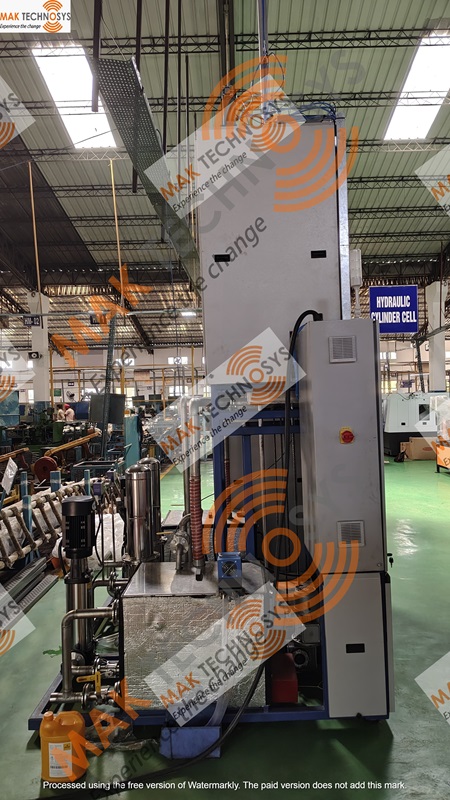 | Vertical Tube Cleaning Filtration Vertical Tube Cleaning Filtration Vertical Tube Cleaning Filtration in Pune Vertical Tube Cleaning Filtration Systems are engineered for efficient cleaning and filtration of tubes,... View product → |
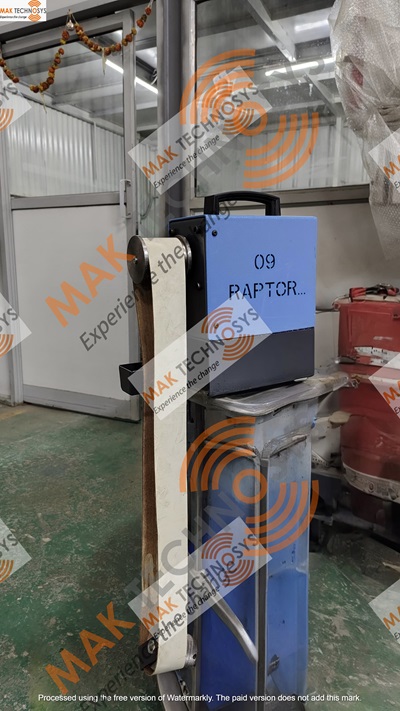 | Belt Skimmer Manufacturer in Pune A Belt Skimmer is an efficient and cost-effective solution for removing floating oils, grease, and fats from coolant tanks,... View product → |
Recover oil control in the right order and prove the result
A clean filter reading does not prove clean tube work. Oil trapped in a bore, manifold, dead leg, or low point can drain back after circulation stops and create a delayed contamination spike.
Use this vertical tube filtration troubleshooting sequence:
- Stop the release: clean the suction strainer, inspect the bypass valve, flush dead legs and poorly swept returns, and remove sludge from low points. Repair pump wear before changing media.
- Restore hydraulic duty: install the specified element, set flow within the tube-side velocity limit, and confirm the filter housing seals without bypass leakage.
- Stabilise the process: set temperature from the cleaner, oil, separator, seals, and media limits. Higher heat lowers viscosity but can increase soil release, foaming, evaporation, and emulsion formation.
- Restore drainage: orient outlets downward, add air blow-off or vacuum assist where needed, and allow enough drain time before handling the tubes.
- Run a controlled batch and compare measurements before and after cleaning.
For oil filtration systems for vertical tube cleaning problems, specify industrial oil filtration equipment by contaminant form, flow, temperature, and allowable pressure drop—not by “5-micron” alone.
| Check | Confirms recovery | Warning |
|---|---|---|
| Differential pressure and flow | Element and hydraulic duty remain stable | Rising pressure or falling flow |
| Free-oil test and settling layer | Separation removes floating or dispersed oil | Cloudy fluid or persistent layer |
| Gravimetric oil-and-grease result | Total oil loading declines | Tank result falls but work-zone sample rises |
| Clean-tube and post-cleaning drain samples | Oil no longer returns from the work | Delayed contamination spike |
Frequently asked questions
What does rising differential pressure with falling flow indicate?
It indicates filter-element loading when the pressure increase occurs across the element and the pump and valves remain functional.
How do you determine whether oil is floating, dispersed, or emulsified?
Collect a representative bath sample and observe whether oil forms a surface layer, suspended droplets, or a stable cloudy mixture after standing.
Which parts of a vertical-tube circuit should you inspect for oil-control problems?
Inspect the suction line, pump, valves, bypass, filter elements, return line, drains, separator, and tube-side flow path.
What information is needed to specify filtration for vertical tube cleaning?
Specify oil form, required flow, operating temperature, particle load, pressure limits, element rating, and the tube-side duty.
How can you prove that oil control has been recovered?
Record differential pressure, flow, temperature, and oil carryover before and after each corrective step, then compare the readings under the same operating conditions.