
A seven-tank line can give a bearing rebuilder repeatable washing, rinsing, drying, and preservation, but the tank count alone does not prove that it will clean every bearing safely. Use the bearing type, contamination, required cleanliness, production volume, and site utilities to decide whether a multi-stage line is justified or a smaller system will produce better results.
Key takeaways
- Choose seven tanks for repeatable volumes and defined cleanliness limits.
- Use separate stages for washing, rinsing, drying, and corrosion protection.
- Match tank chemistry and agitation to seals, cages, grease, and bearing geometry.
- Validate cleanliness, drying, and throughput with representative rebuilt bearings.
When a Seven-Tank Line Is the Right Choice for Bearing Rebuilding
Use a seven-tank line for open or serviceable bearings that arrive in repeatable volumes, carry predictable grease or oil contamination, and must meet a defined cleanliness limit before inspection and relubrication. It is excessive for occasional, mixed one-off repairs.
| Job profile | Seven-tank decision | Better alternative |
|---|---|---|
| Repeatable bearing families, high volume, controlled contamination | Justified; dedicated wash, rinse, corrosion-control, and drying stages improve consistency | Validate the cycle on each bearing type |
| Small batches and mixed one-off repairs | Usually excessive; chemical carryover, changeovers, wastewater, and bath maintenance add cost without clear cleaning gains | A validated single-tank ultrasonic or wash-and-rinse system |
| Sealed-for-life bearings | Poor candidate; removing the seal can damage its lip and disturb the original grease fill | Replace the bearing |
| Damaged races, spalling, brinelling, cracks, damaged cages, or dimensional loss | Cleaning cannot repair these defects | Inspect, repair through the correct process, or reject |
The case for seven tank cleaning for bearing refurbishing depends on the whole operation, not the tank count. “Seven tank” describes vessels, not a universal recipe; the sequence must match bearing materials, lubricant, contamination, and cleanliness limits.
For 7 tank process machine applications in Coimbatore, include water quality, wastewater treatment, electrical capacity, ventilation, compressed air, chemical storage, and spare-parts access in the design. An oil skimmer removes floating oil, not emulsified oil, dissolved soil, or fine solids; specify filtration, bath monitoring, and scheduled solution replacement as well.
A Practical Seven-Stage Process for Open and Serviceable Bearings
Open or serviceable bearings are suitable for a seven-stage rebuild only after you confirm that cleaning is not being used to hide damage. Reject parts with spalling, brinelling, cracks, raceway fatigue, dimensional loss, or damaged cages; washing cannot repair them.
Record the bearing number, disassembly orientation, seals, shields, and contamination before loading bearing refurbishment cleaning equipment.
1. Disassemble and segregate. Remove old seals, shields, grease, and loose debris. Protect parts that cannot tolerate immersion, and keep matched components together.
2. Prewash. Use a cool or warm compatible cleaner to remove bulk grease and abrasive soil. This prevents the main wash tank from loading rapidly.
3. Main wash. Apply heated detergent, agitation, or controlled ultrasonics to open races, rolling elements, cages, and blind passages. Set time, temperature, and chemistry from the bearing material and contamination.
4. First rinse. Remove loosened soil and detergent with clean water or a compatible rinse. Poor overflow control carries abrasive residue into later tanks.
5. Final rinse and protection. Use a cleaner rinse, then apply corrosion inhibitor when storage requires it. Confirm compatibility with the final grease or oil; inhibitor residue can prevent adhesion.
6. Dry immediately. Use filtered warm air or another validated method, rotating the bearing without overspeeding it. Water left in raceways starts corrosion before assembly.
7. Inspect, lubricate, and release. Check raceways, rollers, cage pockets, cleanliness, and free rotation under suitable light and magnification. Apply the specified lubricant quantity, reassemble correctly, and verify residual detergent or particles when the application demands it.
A multi stage bearing cleaning machine earns its place when sizes, contamination, chemistry, and throughput repeat. For mixed one-off repairs, a smaller validated system may avoid carryover, wastewater, and changeover burdens.
How Bearing Geometry, Contamination, and Chemistry Set the Limits
An open, disassembled steel rolling-element bearing with removable seals is the safest candidate for aqueous immersion and ultrasonic cleaning. A retained seal, shield, porous bushing, polymer liner, plated surface, or blind passage changes that decision because liquid or residue can remain where inspection and drying cannot reach.
Choose the method against the bearing’s construction and contamination:
- Immersion suits open steel components with removable grease and ordinary shop soil. Protect aluminum cages, zinc-plated parts, coatings, and elastomers from high-pH detergent.
- Ultrasonic cleaning reaches raceways, rolling-element pockets, and cage gaps. Suspend bearings in a basket; contact with the tank bottom causes metal-to-metal noise, uneven cavitation, and possible surface damage.
- Solvent cleaning removes hydrocarbon grease without an alkaline bath, but verify compatibility with seals, coatings, cage materials, ventilation controls, and fire requirements before use.
- Vapor degreasing efficiently strips oil as solvent vapour condenses on cooler parts. It does not remove trapped particles or replace rinsing, filtration, and drying.
Set the detergent concentration, temperature, and exposure time from material-compatibility tests, not from a generic high-pH setting. Rusted surfaces and hardened deposits may need mechanical or chemical pre-treatment; forcing them through ultrasonics can loosen damage without restoring the bearing.
Specify these limits when selecting bearing refurbishment cleaning equipment. A seven-tank line becomes unsuitable if seals must remain intact, chemistry cannot tolerate the materials, or mixed repairs create excessive carryover and bath changes. Check free oil with a skimmer, but use filtration and bath replacement for emulsified oil and fine solids.
What to Compare Before Buying a Seven-Tank Machine
Choose a true seven-tank line when you repeat the same bearing families, contamination load, chemistry, and cleanliness limit. For mixed one-off repairs, chemical carryover, wastewater, bath maintenance, and changeover time can outweigh its benefit.
| Option | Strength | Limitation for bearing rebuilding |
|---|---|---|
| True seven-tank line | Separates prewash, ultrasonic wash, rinses, corrosion protection, and drying for repeatable results | Needs basket loading control, filtration, bath monitoring, utilities, and wastewater planning |
| Manual solvent cleaning | Low entry cost and flexible for unusual parts | Operator variation, solvent exposure, poor documentation, and inconsistent cleaning inside cage pockets |
| Single-tank ultrasonic equipment | Effective for small batches and one chemistry | Combining wash and rinse stages increases carryover; draining and drying become the bottleneck |
| Single-chamber machine | Enclosed wash, rinse, and dry cycle with less handling | One chamber limits process separation and may not support several chemistry stages |
| Spray washer | Fast removal of loose grease and chips from accessible surfaces | Spray shadows, cage geometry, and blind passages can leave contamination behind |
| Conveyorized system | High continuous throughput for standardized parts | Poor fit for varied bearing sizes, batch traceability, and careful inspection handling |
| Vapor degreaser | Strong removal of oil and solvent-compatible grease without water | It does not replace aqueous rinsing, corrosion protection, or particle filtration |
For 7 tank process machine applications, confirm that the line exposes every surface through rotation, oscillation, circulation, spacing, and correct drain orientation. Tank count alone proves nothing.
A multi stage bearing cleaning machine is excessive when volume is low or contamination changes daily. Select it when validated cycle records, repeatable loading, controlled chemistry, and local support justify the added maintenance.
How to Size and Validate the Line for a Rebuilding Shop
Size the line from your actual workload, not a nominal tank capacity. Record bearing type, outside and inside diameters, width, basket weight, grease load, particle contamination, batches per shift, takt time, and the cleanliness limit for each application before requesting 7 tank process cleaning machines for bearing rebuilding in coimbatore.
1. Give the supplier three representative loads: the smallest bearing, the largest bearing, and the dirtiest repeatable batch. State whether parts are open, shielded, or caged, and specify basket capacity, loading pattern, part spacing, drain orientation, rotation or oscillation, spray coverage, ultrasonic frequency, and usable tank dimensions.
2. Request controls for temperature, concentration, immersion time, filtration, oil skimming, overflow, rinse conductivity, level, and drying temperature. Confirm that cage pockets and blind features receive fluid circulation rather than relying on tank volume or ultrasonic wattage.
3. Confirm site utilities before approving seven tank cleaning for bearing refurbishing: electrical load and phase, water flow and hardness, compressed-air pressure, ventilation, chemical storage, effluent treatment, floor drainage, and space for sludge and filter disposal. Ask for local service response and stocked heating elements, pumps, transducers, seals, and filters from Mak Technosys.
4. Make acceptance testing part of the quotation. Run actual bearings through the worst specified contamination and inspect them after drying, not only by eye; use solvent extraction with gravimetric residue, particle counting or microscopy, and residual detergent or water checks against your written application limit.
Reject the line if it cannot meet throughput and cleanliness targets in a witnessed trial without damaging seals, cages, raceways, or protective finishes. Ensure the trial report records chemistry, temperature, time, loading, and every measured result.
Related products
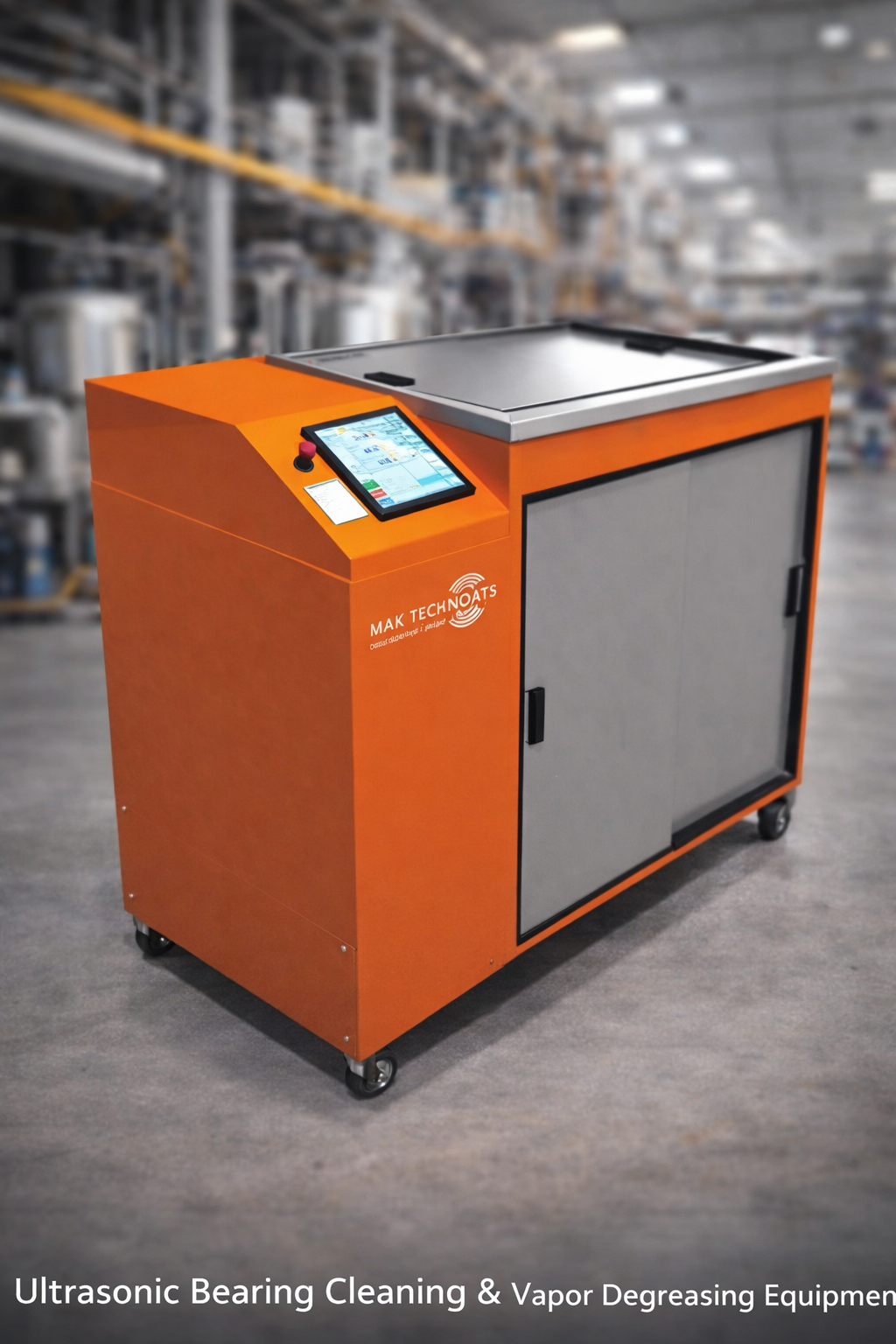 | Ultrasonic Bearing Cleaning & Vapor Degreasing Equipment Ultrasonic Bearing Cleaning & Vapor Degreasing Equipment Advanced Cleaning Solutions for Precision Component Introducing our cutting-edge Ultrasonic Bearing Cleaning & Vapor Degreasing Machine, meticulously... View product → |
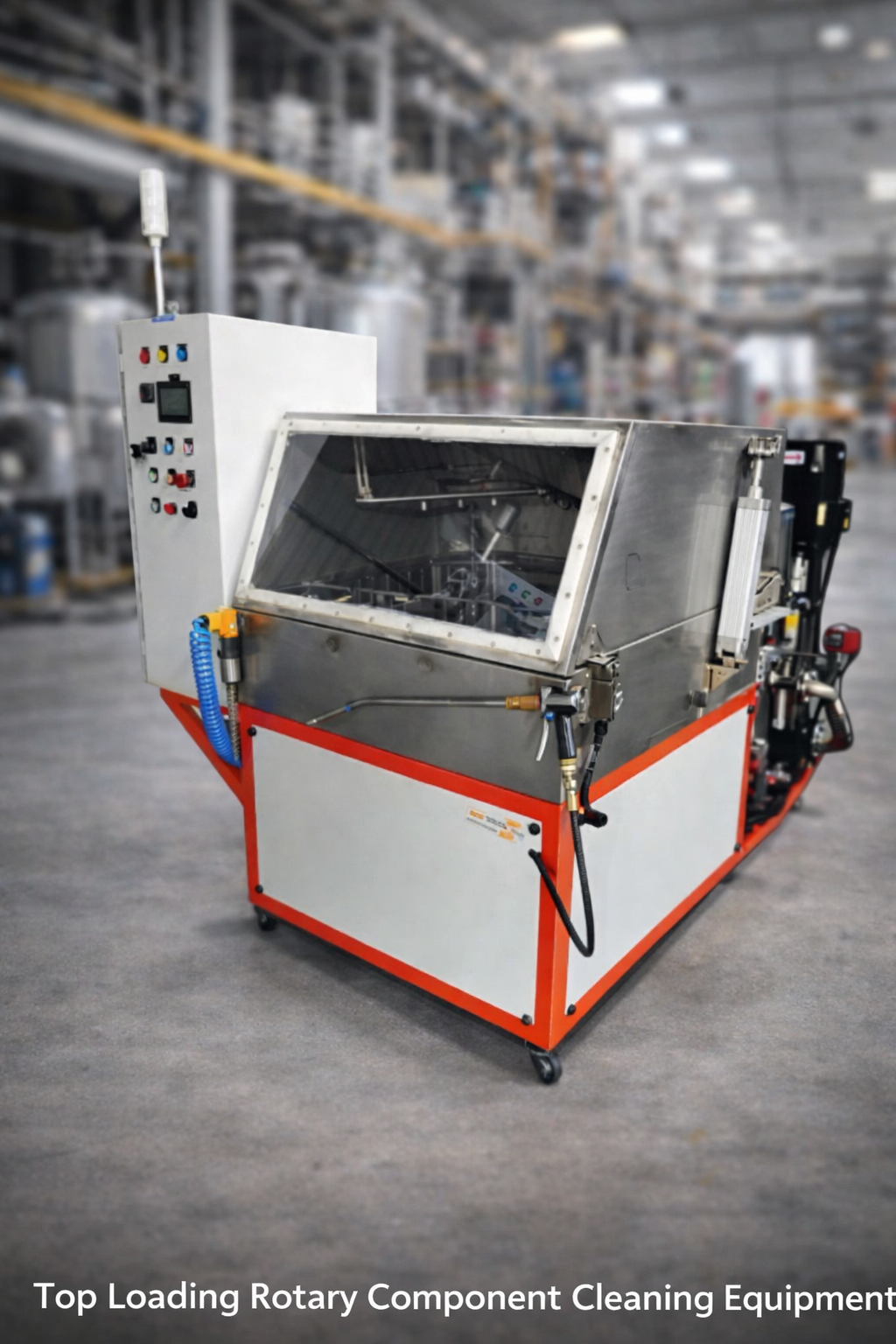 | Top Loading Rotary Component Cleaning Equipment Top Loading Rotary Component Cleaning Equipment Efficient Cleaning Solutions for Industrial Components Welcome to the future of industrial component cleaning with our innovative Top Loading Rotary... View product → |
Frequently asked questions
When is a seven-tank line suitable for bearing rebuilding?
It suits open or serviceable bearings arriving in repeatable volumes with predictable grease or oil contamination and a defined cleanliness limit. It is excessive for occasional mixed repairs.
What seven-stage process can you use for open and serviceable bearings?
A practical sequence separates pre-cleaning, heated washing, intermediate rinsing, final rinsing, drying, and corrosion protection. Set the exact stages around the bearing material, contamination, and relubrication specification.
How do bearing geometry and contamination limit the cleaning process?
Blind passages, rolling contacts, tight clearances, hardened grease, abrasive particles, and incompatible seals determine the required chemistry, agitation, temperature, filtration, and drying method.
What should you compare before buying a seven-tank machine?
Compare tank volume, usable basket size, loading method, temperature control, filtration, oil separation, rinse quality, drying performance, chemical compatibility, guarding, controls, and service access.
How do you size and validate a seven-tank bearing cleaning line?
Measure batch weight, basket loading, cycle time, contamination load, drying time, and required output. Validate the line with representative bearings using visual inspection, particle or residue checks, and documented acceptance limits.
Related products
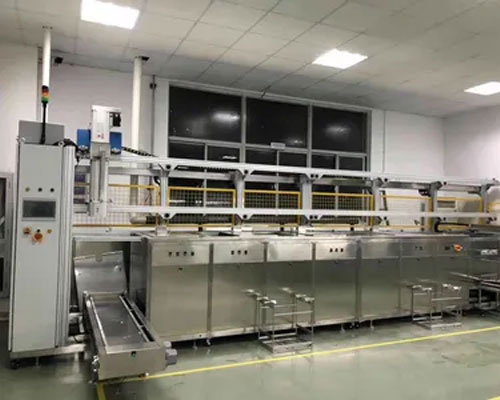 | 7 Tank Cleaning Machine Mak Technosys operates as a leading Tank Cleaning Machine Manufacturers, Suppliers, and Exporters in Pune. View product → |
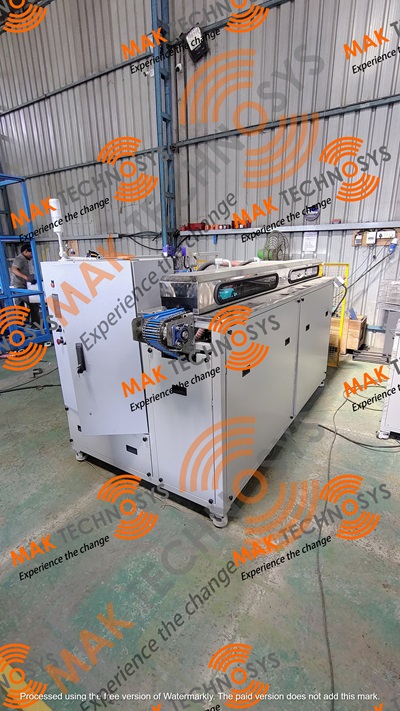 | Conveyorized Bearing Cleaning Equipment Conveyorized Bearing Cleaning Equipment Conveyorised Bearing Cleaning Equipment Manufacturer in Pune In bearing manufacturing and refurbishment processes, cleanliness is critical to ensure... View product → |
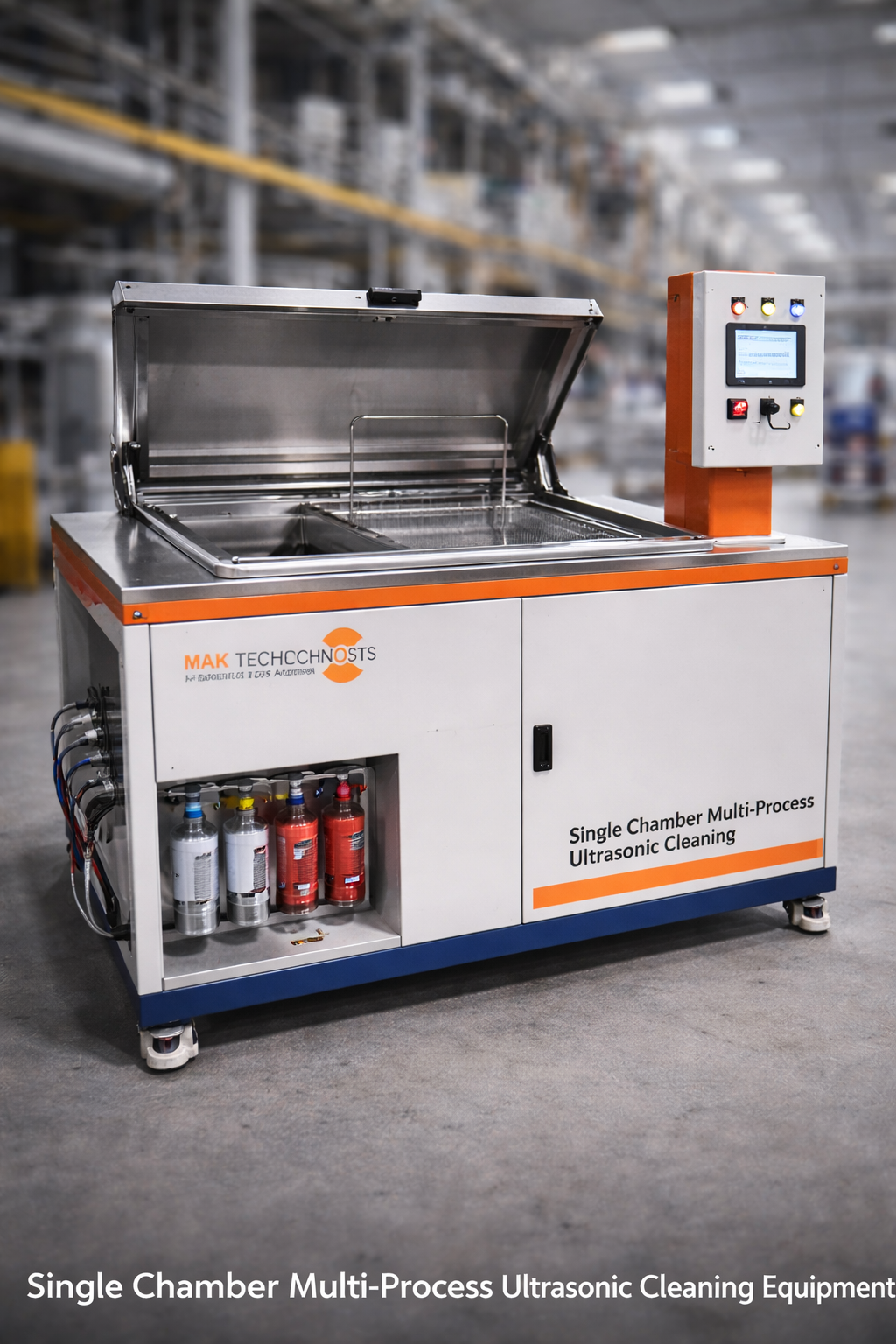 | Ultrasonic Cleaning Equipment Single Chamber Multi-Process Ultrasonic Cleaning Equipment Single Chamber Multi-Process Ultrasonic Cleaning Equipment in Pune In today’s precision-driven manufacturing environment, maintaining component... View product → |