Reliable output depends on more than keeping the line powered and free of alarms. You need a maintenance schedule, measurable process checks, contamination controls, and a controlled recovery method for failures so that the first approved part matches the parts produced later.
Key takeaways
- Record line condition at every shift and batch change.
- Inspect filters, pumps, heaters, airflow, guards, and emergency stops on schedule.
- Control dust, oil, moisture, and residue before they cause coating defects.
- Release the line only after documented recovery checks pass.
Build a Daily, Weekly, Monthly, and Annual Maintenance Schedule
Record the line condition at every shift and batch change; relying on coating-defect reports means you discover blocked filters, drifting viscosity, or weak airflow too late. This is how to maintain automatic UCL coating equipment as a controlled process rather than a repair task.
- Daily: Check tank level, material temperature, viscosity, solids content where applicable, bath concentration, conductivity, pH where required, rinse quality, ultrasonic-generator status, heater readings, pump pressure or flow, nozzle spray pattern, air pressure, conveyor movement, dryer temperature, exhaust airflow, guards, and emergency stops. Record the cup type, orifice, temperature, and viscosity method.
- Weekly: Inspect and clean strainers, filters, nozzles, rinse headers, transducers, seals, sensors, solenoid valves, conveyor bearings, and overspray deposits. Record filter differential pressure; replace the element when it reaches the supplier’s limit or your defined inspection limit, not simply after a calendar period.
- Monthly: Check pump condition, hose connections, damper position, exhaust ducts, fan performance, electrical-panel terminals, interlocks, alarm functions, and cure settings. Compare pressure, flow, temperature, and defect counts with approved baseline values.
- Annually: Calibrate temperature, pressure, flow, viscosity, conductivity, and pH instruments; inspect heaters, ultrasonic generators, drives, electrical protection, ducting, and safety circuits; and review recurring failures and spare-part intervals.
Every intervention belongs in the automatic UCL line maintenance record with material lot, measurements, nozzle identification, cure parameters, defect count, and first-piece approval. After any pump, nozzle, filter, or control change, verify liquid flow, atomizing pressure, gun distance, traverse speed, overlap, trigger timing, ventilation, and guarding before production resumes.
Inspect Every Wetted, Moving, Heated, and Safety-Critical Component
A leak, pressure fluctuation, or temperature drift can create defects before an alarm appears. Include every wetted, moving, heated, and safety-critical part in coating equipment maintenance, and record the measurement rather than marking the item “checked.”
| Zone | Inspect | Measurement that proves control |
|---|---|---|
| Cleaning bath | Heaters, temperature sensors, transducers, ultrasonic generators, pumps, seals, filters, hoses, and tank surfaces | Record bath temperature, concentration, conductivity, pH where specified, and ultrasonic operating condition against approved limits |
| Liquid circuit | Pump seals, packing, diaphragms, hose connections, solenoid valves, filters, and nozzles | Confirm leak-free joints, stable liquid pressure or flow, correct spray pattern, and no bubbles, pulsation, pinholes, or spitting |
| Rinsing and drying | Rinse nozzles, conductivity sensor, drain paths, dryer heaters, fans, and temperature sensors | Record rinse conductivity and drying temperature; test parts for residual chemistry and required cleanliness |
| Motion and enclosure | Conveyor drives, bearings, guides, gun distance, exhaust ducts, booth filters, and dampers | Verify conveyor speed, gun-to-part distance, airflow, and film thickness across a first-piece sample |
| Controls and safety | Electrical panels, wiring, interlocks, guards, emergency stops, and fan or ignition controls | Test each fault response; inspect panels for heat or loose terminals and incorporate OSHA 29 CFR 1910.107 controls for spray operations |
Name the approved flush fluid for every wetted component. A cleaner that removes cured residue can swell seals, attack sensor faces, or leave a film that changes wetting. After maintenance, verify atomizing pressure, overlap, traverse speed, trigger timing, and coating temperature before release.
Control Contamination Before It Becomes a Coating Defect
Treat coating equipment maintenance as contamination control, not a cleaning task. A dirty bath, restricted filter, leaking seal, or wet air line can change adhesion and film appearance before an alarm appears.
1. Confirm the bath contains the intended material, within its shelf life, viscosity, temperature, and concentration limits. Remove settled, gelled, or visibly contaminated material, then circulate the replacement before spraying test parts.
2. Record filter differential pressure and inspect strainers for sludge or coating solids. Replace a filter at the specified pressure limit or inspection condition, not only on a calendar date; restriction causes pressure rise, cavitation, unstable flow, and coating starvation.
3. Check pump seals, packing, diaphragms, and hose connections for leaks. Air entering the liquid circuit creates pulsation, bubbles, pinholes, spitting, and intermittent spray even when the pressure gauge reads normally.
4. Clean each nozzle and verify its identification, orifice, spray pattern, liquid pressure, atomizing pressure, gun distance, traverse speed, overlap, and trigger timing. A new nozzle or pump can restore operation while changing film thickness.
5. Drain air receivers and moisture traps, inspect coalescing filters, verify regulators, and control oil, water, and desiccant dust in atomizing air. Contaminated air produces craters, fisheyes, and poor atomization.
6. Check rinse conductivity, temperature, flow, and visible carryover, then verify dryer temperature, airflow, and cure conditions. After adjustment, run test parts and record the material lot, filter pressure, air pressure, defect count, and first-piece approval; “line cleaned” cannot explain recurring drift. Automatic UCL line maintenance needs that evidence.
Use a Controlled Recovery Procedure After Line Failures
Stop automatic operation and place the line in a safe recovery state. The restart interlock must block spraying until guarding, exhaust, compressed air, circulation, material level, and delivery pressure are confirmed. Apply lockout/tagout before opening guards, clearing jams, or servicing electrical, pump, or heater components.
1. Record the alarm, time, batch, affected parts, tank condition, and last acceptable inspection. Quarantine parts processed after the last verified good result.
2. After a power failure or emergency stop, inspect for spills, leaks, displaced parts, open valves, and damaged tooling. Reset the fault only after confirming that the conveyor, pumps, heaters, spray heads, and sensors are ready.
3. For a conveyor jam, isolate energy, remove the obstruction, check belt tracking and fixtures, and jog the conveyor at low speed. Do not resume automatic motion until the guarding interlock stops the drive during a test.
4. For pump or heater failure, stop material delivery, verify pump prime, filter differential pressure, heater wiring, temperature sensor, and thermal protection. Repair the fault, circulate material, purge trapped air, and confirm stable temperature and flow.
5. For a contaminated bath, stop production, identify the contaminant, quarantine the bath, drain or filter it according to the coating supplier’s instructions, and flush dead legs, unused branches, spray heads, and return piping. Refill with material within shelf life.
6. After a long shutdown, inspect settled or gelled material, record viscosity and temperature, then run controlled circulation before spraying test parts. Release automatic coating line recovery only after cleanliness, film appearance, cure, and process records pass.
Define the Service Workflow and Release Criteria
Internal maintenance is sufficient when the fault is isolated, the technician has corrected it, and every affected control remains within its documented operating range.
Escalate to ucl coating line service when the cause is unclear, the fault recurs, a pump, heater, controller, drive, safety circuit, exhaust system, or application setting has changed, or the line cannot hold its process window.
1. Quarantine affected parts and record the failure, material lot, bath age, alarms, defect type, and last acceptable run.
2. Inspect filters and strainers using the defined differential-pressure limit, then check pump seals, hoses, nozzle identification, liquid pressure or flow, atomizing pressure, and trapped air. Check booth airflow, fan operation, duct condition, damper position, and ignition controls against the inspection requirements of OSHA 29 CFR 1910.107.
3. After long shutdowns, perform automatic coating line recovery through controlled circulation. Confirm material shelf life, remove settled or gelled material, verify pump prime, purge air, and run test parts instead of sending production directly to the line.
4. Release the line only after recording viscosity and temperature, filter differential pressure, pump pressure or flow, air pressure, gun distance, traverse speed, overlap, trigger timing, cure parameters, defect count, and signed first-piece approval. Equipment alarms alone do not prove film thickness or adhesion.
Mak Technosys can help when repeated drift points to coordinated cleaning, pumping, coating, and control-system faults rather than a single replaceable part.
Related product
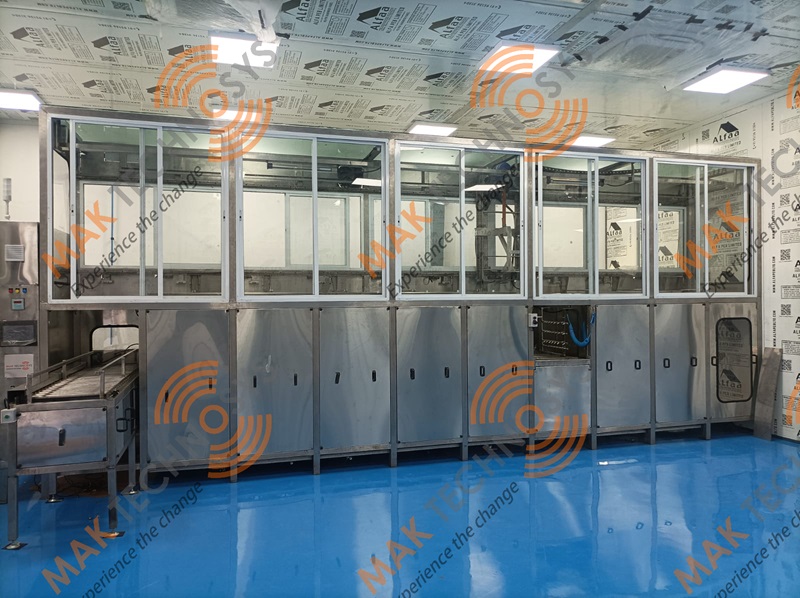 | Automatic UCL Line Automatic UCL Line for Coating Industry Automatic UCL Line for Coating Industry in Pune Surface preparation is a critical step in achieving high-quality, long-lasting coatings. View product → |
Frequently asked questions
How often should you maintain an automatic UCL coating line?
Record its condition at every shift and batch change, then complete defined daily, weekly, monthly, and annual tasks.
Which components require inspection during coating equipment maintenance?
Inspect every wetted, moving, heated, and safety-critical component, including filters, pumps, hoses, heaters, airflow devices, guards, and emergency stops.
How do you prevent contamination from causing coating defects?
Control dust, oil, moisture, residue, and filter loading through housekeeping, fluid checks, scheduled cleaning, and documented inspections.
What checks are required before restarting an automatic coating line after a failure?
Identify and correct the fault, clean affected components, verify operating conditions and safety devices, run a controlled test, and release production only after documented criteria pass.