A seven-tank line is not automatically better than a single immersion tank, spray washer or three-stage system. The right choice depends on contamination, component geometry, cleanliness limits, output, utilities and the cost of rejected parts; by the end, you can compare each option against those practical requirements.
Key takeaways
- Use separate tanks to prevent dirty wash chemistry reaching finished parts.
- Choose simpler systems when soil loads, volumes or cleanliness targets are modest.
- Match each stage to the part material, soil type and required surface finish.
- Specify filtration, oil separation, temperature control and drying performance before purchase.
What the Seven Tanks Actually Do in Sequence
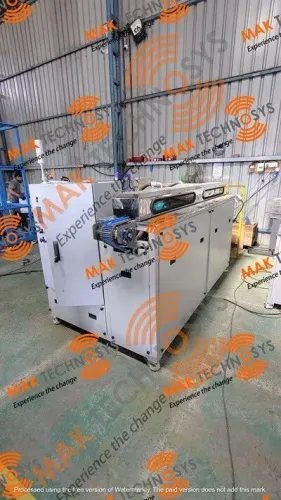
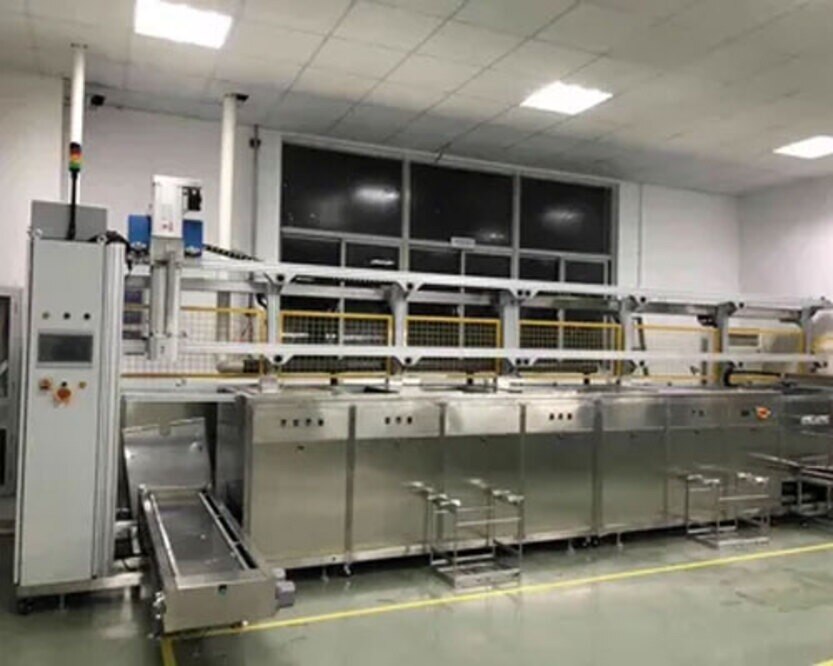
A 7 tank cleaning machine is not defined by a universal recipe. The tanks usually separate dirty washing, rinsing, surface treatment and drying so oil and chemicals do not travel back onto cleaned parts. Loading and unloading happen at the handling stations around the tanks.
- Pre-wash loosens machining oil, chips and loose dirt before the finer cleaning stage.
- Ultrasonic alkaline wash attacks oil trapped in blind holes, threads and narrow gaps through cavitation.
- The first rinse removes alkaline solution and suspended soil carried from the wash tank.
- A second, often cascade-fed rinse reduces chemical carryover before treatment or final rinsing.
- Neutralization, passivation or another conversion treatment protects the substrate or prepares it for coating.
- A final deionized-water rinse limits dissolved salts and spotting on the cleaned surface.
- Hot-air drying removes water from external surfaces and internal features before inspection or packaging.
That sequence changes with the part and the acceptance test. A 7 tank process cleaning system for aluminium may need a different chemistry and treatment stage from one cleaning steel components after heavy cutting oil.
Tank count alone is an incomplete specification. Ask for each tank’s working volume, temperature range, dwell time, filtration, overflow arrangement and chemical concentration controls. Also specify ultrasonic frequency and power, rinse-water quality, air temperature and airflow, transfer time, and how drag-out is managed.
Seven poorly separated stages can circulate contamination, while a well-controlled three-stage line can produce cleaner parts with less water, energy and maintenance.
When Simpler Cleaning Systems Are the Better Choice
A simpler system is better when the soil is light, parts have open surfaces, production volume is modest, and the cleanliness limit is not demanding. Extra tanks add floor space, heat-up energy, chemical inventory, transfer time, maintenance points and drag-out risk.
| Option | Main strength | When it is the better choice |
|---|---|---|
| Manual washing | Lowest equipment cost and flexible handling | Prototypes, repairs, irregular parts and low volumes; labour variation makes it weak for repeatable production |
| Single-tank immersion | Simple soaking with limited capital cost | Small batches with one soil type and no strict rinse or drying requirement |
| Spray washer | Fast surface cleaning and straightforward loading | Open parts with accessible faces; spray pressure cannot reliably clean blind holes or shielded recesses |
| Single-chamber machine | Wash, rinse and dry in one enclosed cycle | Mixed low-to-medium volumes where footprint and operator time matter more than continuous throughput |
| Three- or four-stage line | Separates washing, rinsing and drying without a long line | Light oil, open geometry and modest cleanliness limits; it can outperform a seven-tank line on cost and space |
| Seven-tank line | Separate dwell times and cleaner process boundaries | High repeatability, difficult soils, blind features, corrosion control, multiple rinses or demanding downstream coating |
The seven tank process benefits appear only when each stage removes a measurable problem. A multi stage industrial cleaning machine needs controlled transfer direction and counterflow rinsing; otherwise drag-out contaminates later tanks and defeats the extra stages.
Compare total cost per accepted part, including water, effluent, heating, chemicals, filters, bath changes, loading labour, rewash and rejected components. Treat solvent vapor-degreasing as a separate process family, not as another rinse tank.
Match the Stages to Parts, Soils and Production Demand
A seven-stage line earns its footprint only when each stage solves a defined contamination or handling problem. Match the process to the part, not to a standard tank count.
1. Start with geometry. Blind holes, threads, narrow passages and overlapping faces need immersion, ultrasonic energy, directed spray or circulation through the load. Open, simple parts with light soil may need only a spray washer or three-stage line.
2. Identify the soil before selecting chemistry. Free machining oil can be skimmed from a bath, while emulsified coolant needs filtration and bath control. Fine chips need filtration; oil trapped in porous material may require longer immersion, agitation or a different process.
3. Set batch size against takt time. Large baskets and short takt times favour automated transfer, repeatable dwell times and parallel loading. Small batches with variable recipes can lose time in heat-up, transfer and changeover on a seven-tank system.
4. Define the required surface condition. A passivation or treatment stage fits corrosion-sensitive steel; a controlled final rinse fits parts headed to coating or bonding. Residual water in blind holes can cause stains, corrosion or coating defects, so specify air knives, heated filtered air or vacuum drying.
5. Specify handling constraints. Delicate finishes need low-impact transfer and protected fixturing; heavy parts need load-rated conveyors and floor capacity. Keep dirty loads moving away from clean tanks, and use cascade rinsing to reduce drag-out.
A 7 tank process for cleaning machines in Pune should therefore be justified by measured soil, geometry, cleanliness limit and takt time—not by tank count alone. Seven tanks add control and separation, but also utilities, maintenance and footprint.
Controls That Decide Whether the Parts Are Truly Clean
A 7 tank cleaning machine needs a measurable operating window for every bath. Control alkaline concentration and pH by titration, then record temperature and dwell time. Replace the wash when soil loading, conductivity, or emulsion breaks the defined limit; otherwise the bath becomes a contamination reservoir.
Drag-out is the main route by which oil, alkaline cleaner, and particles move forward. Use counterflow rinsing, controlled overflow, fixed transfer direction, and enough drain time above each tank. Check final-rinse conductivity and replace or polish the water when it exceeds the product limit.
| Control | What to verify | Failure prevented |
|---|---|---|
| Chemical bath | Concentration, pH, temperature, dwell time | Under-cleaning and chemical residue |
| Rinsing | Cascade flow, tank level, conductivity | Carryover into the final rinse |
| Ultrasonics | Frequency, power, cavitation coverage, liquid level | Blind holes and recesses retaining soil |
| Filtration and skimming | Filter rating, flow, differential pressure, free-oil removal | Solids or floating oil returning to parts |
| Drying and cleanliness | Air temperature, airflow, moisture, residue or particle test | Corrosion, water marks, and rejected parts |
An oil skimmer removes separable free oil, not stable emulsions, dissolved contamination, or oil trapped in porous parts. A 7 tank process cleaning system therefore needs bath chemistry control, filtration, skimming, and scheduled bath replacement together.
Specify cleanliness tests that match the downstream risk: water-break testing for surface films, gravimetric residue for total contamination, particle counts for critical assemblies, or ionic testing where corrosion matters. Treat vapor degreasing as a separate solvent process, with its own ventilation, containment, fire controls, exposure limits, and waste handling.
How to Specify and Justify a Seven-Tank Line in Pune
Calculate total cost per accepted part before approving a seven-tank line. Include water and effluent volume, heating duty, chemical and filter consumption, bath-replacement cost, operator loading time, cycle time, rewash rate, and rejected or corroded components. The seven tank process benefits justify extra footprint only when they reduce a measured defect or operating cost.
- Test representative parts with the actual soil, substrate, chemistry, ultrasonic frequency, temperatures, dwell times, rinse sequence, and drying conditions. Inspect blind holes and critical surfaces using the cleanliness method required by your customer, such as gravimetric residue, particle counting, water-break testing, or ionic contamination testing.
- Measure the Pune installation site: incoming-water hardness and conductivity, electrical load, heating capacity, compressed-air quality, exhaust route, floor loading, drainage, available floor space, and effluent-treatment responsibility. A supplier cannot select these values from the city name alone.
- Document tank purpose, transfer direction, overflow rates, counterflow or cascade arrangement, bath-change limits, alarms, recipe control, maintenance access, acceptance criteria, and rewash handling.
| Decision measure | Seven-tank line | Simpler system |
|---|---|---|
| Process proof | Separate wash, rinse, treatment, final rinse, and drying stages | Fewer controls and less separation |
| Contamination risk | Drag-out requires managed overflow and tank levels | Less carryover to control |
| Investment | Higher utilities, footprint, maintenance, and transfer time | Lower initial and operating burden |
| Best justification | Blind features, strict cleanliness, repeatability, high volume | Light soil, open parts, modest limits |
Evaluate solvent vapor-degreasing separately; ventilation, fire controls, exposure, containment, and waste handling are not “extra rinse” requirements. Mak Technosys can be asked to compare its multi stage industrial cleaning machine proposal against a three- or four-stage alternative using these documented results.
Related product
 | 7 Tank Cleaning Machine Mak Technosys operates as a leading Tank Cleaning Machine Manufacturers, Suppliers, and Exporters in Pune. View product → |
Frequently asked questions
What does a seven-tank cleaning machine do in sequence?
It separates dirty washing, rinsing, surface treatment and drying into controlled stages, with loading and unloading at handling stations.
When is a simpler cleaning system better than a seven-tank line?
Choose a simpler system when parts have light, consistent soils, production volumes are limited, and you do not need multiple rinses or treatment stages.
How should you match a seven-tank process to your parts and soils?
Define the part material, contaminant type, required cleanliness, throughput and drying needs before assigning washing, rinsing and treatment stages.
Which controls determine whether parts are truly clean?
Check wash temperature, chemistry concentration, spray or immersion action, filtration, oil removal, rinse quality, bath condition and drying performance.
How do you justify a seven-tank cleaning machine in Pune?
Compare the line with simpler options using required cleanliness, rejected parts, labour, chemical consumption, throughput, floor space and maintenance costs.