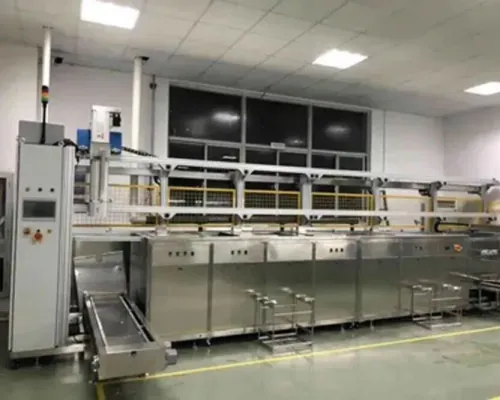
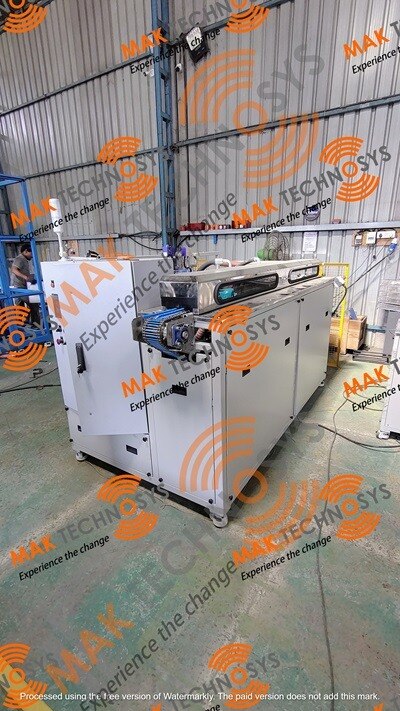
A conveyorized cleaning line is worth the investment only when its practical capacity, process controls, and total operating cost match your bearing mix and production rate. You will be able to compare it with batch and manual methods, protect sensitive bearing features, and calculate payback using the costs your current process hides.
Key takeaways
- Choose automation when repeatable volume supports continuous line loading.
- Use fixtures, controlled pressure, and suitable chemistry to protect precision bearing features.
- Calculate throughput from cycle time, uptime, changeovers, and rejected parts.
- Specify filtration, oil separation, drying, and cleanliness controls before comparing equipment.
What a Conveyorized Bearing Cleaning Process Actually Includes
A conveyorized bearing cleaning line accepts parts with repeatable geometry, a stable contamination load, and enough dimensional consistency for automatic loading and support. Bearings arrive in cleanable fixtures or pockets, move through each timed stage without touching or masking one another, and leave directly for assembly, inspection, oiling, or protected storage.
| Stage | What happens | Control point |
|---|---|---|
| Loading and orientation | An operator, bowl feeder, or robot places each bearing in a defined position | Reject mixed sizes, damaged cages, loose shields, and parts that cannot sit securely |
| Prewash | Chips, machining coolant, and heavy oil are loosened or removed | Prevent bulk contamination from exhausting the main wash |
| Main wash | Spray, immersion, ultrasonic energy, or a combination removes remaining soil | Match pressure, chemistry, temperature, and dwell time to the bearing |
| Rinse stages | Fresh or recirculated water removes detergent and detached particles | Check rinse conductivity and prevent residue in raceways |
| Drying | Filtered forced air or heated air removes surface and trapped moisture | Confirm residual moisture before lubrication or assembly |
| Unload and transfer | The bearing enters a clean fixture, conveyor, packaging station, or oiling unit | Seal the path and define the maximum clean hold time |
The line cannot correct dirty totes, abrasive dust, wash-system sludge, or chips introduced upstream. Clean fixtures, controlled handling, and sealed transfer are part of industrial bearing cleaning, because recontamination after drying cancels the measured cleaning result.
Specify acceptance limits for residual particles, detergent, moisture, and corrosion protection. If bearing types change frequently, parts overlap, or operators cannot maintain the loading rate, batch equipment may provide better control than conveyorized bearing cleaning.
When the Production Volume Justifies an Automatic Line
A conveyorized line earns its place when loading, washing, drying, and inspection consume enough labour or delay the next operation to become a production constraint. Stable bearing geometry, a predictable contamination load, and a takt time that the line can repeat every shift matter more than a headline bearing count.
| Option | Economic strength | Where it loses |
|---|---|---|
| Manual solvent tanks | Lowest equipment cost and high flexibility | Labour, solvent exposure, inconsistent cleaning, and slow inspection |
| Batch ultrasonic cleaning | Handles mixed batches and complex contamination | Waiting for full loads, unloading labour, and variable batch completion time |
| Spray washer | Effective for robust, open bearings at moderate volume | Limited access to shielded features and possible manual transfer |
| Rotary system | Compact indexing with defined stages | Less flexible for many bearing sizes and recipe changes |
| Multi-chamber batch line | More automation without continuous flow | Idle capacity while a batch completes |
| Conveyorized line | Repeatable takt, reduced handling, and direct transfer | Higher capital cost and concentrated maintenance risks |
Ask whether the line will run near its practical capacity, not its nameplate rate. A half-empty conveyor still consumes heaters, pumps, water, chemicals, maintenance time, and floor space.
Include these costs in the comparison:
- Manual loading, inspection, rework, and bearing replacement
- Solvent or detergent use, bath changes, wastewater treatment, and disposal
- Filters, nozzles, pumps, heaters, conveyor drives, dryers, and spare parts
- Changeovers, fault recovery, preventive-maintenance labour, and lost production
Are conveyorized bearing cleaning machines worth it? An automatic bearing cleaning machine is more economical when repeated demand keeps it occupied and inconsistent manual cleaning creates measurable rejects or rework. For low-volume orders, frequent bearing changes, or intermittent upstream contamination, batch equipment usually costs less and adapts faster.
How to Clean Bearings Without Damaging Precision Features
Open bearings with exposed raceways tolerate aqueous washing better than shielded or sealed bearings, but precision features still fail when chemistry, pressure, or drying is uncontrolled. Choose the process around the bearing construction, lubricant requirements, and the cleanliness needed for assembly.
| Option | Best fit | Main control |
|---|---|---|
| Alkaline aqueous cleaning | Open steel bearings with heavy oil or coolant | Rinse completely; residual alkalinity and high conductivity can cause corrosion |
| Neutral detergents | Light soil, mixed metals, and sensitive finishes | Confirm detergent residue will not interfere with lubricant or assembly |
| Solvent degreasing | Heavy hydrocarbon film or water-sensitive processes | Control vapour exposure, compatibility, and solvent trapped in seals |
| Ultrasonic cleaning | Small open bearings with contamination in raceways or cage pockets | Limit power and time; excessive cavitation can damage delicate surfaces |
| Forced-air or hot-air drying | Open bearings after rinsing | Use controlled air knives or heated air; never spin bearings with compressed air |
| Corrosion protection | Carbon-steel bearings awaiting assembly or storage | Apply a compatible preservative after final rinsing and verify film coverage |
Do not wash a shielded or contact-sealed bearing solely because its exterior is dirty. Detergent or solvent can dilute factory grease, attack elastomeric seals, or remain trapped behind them; follow the bearing manufacturer’s cleaning and relubrication limits.
Effective industrial bearing cleaning also depends on presentation. Space and orient each bearing so jets, ultrasonic energy, rinse water, and drying air reach the raceways; nesting creates shadowed surfaces. Specify residual moisture, detergent, particles, and corrosion protection when selecting bearing cleaning equipment, not merely “clean.”
How to Calculate Practical Throughput, Cleanliness, and Payback
A line pays back only at its net rate, not the number printed on its brochure. Calculate practical output as:
Net bearings/hour = gross rate × loading factor × run-time factor × (1 − reject rate)
1. Derive gross rate from the constraint. For continuous motion, divide conveyor speed by pitch, then reduce the result if bearings touch, nest, or mask critical surfaces. For indexed motion, divide the number of usable positions by index time. Check the slowest dwell stage: wash, rinse, drying, inspection, loading, or unloading.
A dryer that holds 20 bearings for 4 minutes supplies only 300 bearings per hour, regardless of pump capacity.
2. Subtract reality from the schedule. Measure loading and unloading time, product changeovers, planned maintenance, shift breaks, and unplanned downtime. Record rejected bearings, rework, replacement bearings, and cleanliness-test failures by batch.
3. Cost one acceptable bearing. Include operator wages, chemicals, water, wastewater treatment, energy, filters, bath disposal, preventive-maintenance labour, spare parts, floor-space cost, inspection, and downtime recovery. Compare that figure with the complete current process, including solvent handling and inconsistent-cleaning losses.
4. Calculate payback as installed cost divided by annual savings, using net accepted bearings and actual operating hours. Run the model at low, expected, and peak volume; are conveyorized bearing cleaning machines worth it when demand cannot keep loading and inspection busy?
Mak Technosys can help specify bearing cleaning equipment around pitch, presentation, dwell, and transfer constraints rather than quoting speed alone. If contamination is intermittent or product mix changes constantly, include a batch-line comparison; flexibility may beat automation.
Related products
 | Conveyorized Bearing Cleaning Equipment Conveyorized Bearing Cleaning Equipment Conveyorised Bearing Cleaning Equipment Manufacturer in Pune In bearing manufacturing and refurbishment processes, cleanliness is critical to ensure... View product → |
 | Conveyorized Component Cleaning Conveyorized Component Cleaning Manufacturer in Pune Conveyorised Component Cleaning Systems are designed for continuous, high-volume cleaning of industrial components with... View product → |
The Controls That Decide Whether the Investment Delivers
A specification that says “clean bearing” is incomplete. State acceptance limits for residual moisture, detergent, rinse conductivity, particle count and corrosion protection, then define whether the output goes directly to assembly or into protected storage.
Include these controls in the purchase specification:
- Record the recipe, conveyor speed, bath temperature, chemical concentration, rinse conductivity, dryer temperature and airflow for each batch or lot.
- Trigger a hold or reject when spray pressure falls, a filter reaches its differential-pressure limit, concentration leaves range, or the drying cycle ends early.
- Set the allowable clean hold time, packaging method, storage humidity and corrosion-inhibitor type.
- Provide clean fixtures and covered transfer from the dryer; dirty totes, machining debris or coolant can recontaminate a bearing before assembly.
- Price bath dumps, filter changes, chemical replenishment, wastewater treatment, spare parts and recovery after faults.
Aqueous conveyorized bearing cleaning requires prompt forced-air drying. Trapped water or alkaline residue can cause corrosion and interfere with lubricant or assembly. Verify that the dryer removes moisture from the bearing geometry, not just its outer race.
An oil skimmer removes floating oil, not emulsified contamination. Select filtration by flow, dirt-holding capacity, pressure drop, bypass protection and the particle distribution that matters to the bearing.
Confirm the bearing manufacturer’s limits before using an automatic bearing cleaning machine on shields or contact seals. Washing can remove factory grease, attack elastomers or trap detergent behind the seal.
Frequently asked questions
What does a conveyorized bearing cleaning process include?
It can include automatic loading, washing, rinsing, drying, inspection, oiling, and transfer to assembly or protected storage.
When does production volume justify an automatic bearing cleaning machine?
Automation becomes practical when repeatable bearing volume, stable contamination, and line-loading requirements justify its capital and maintenance costs.
How can you clean bearings without damaging precision features?
Use suitable fixtures, controlled spray pressure, compatible chemistry, correct temperature, filtered fluids, and drying that avoids impact or residue.
How do you calculate the practical payback of conveyorized bearing cleaning?
Measure usable parts per hour after changeovers, downtime, rejects, labour, utilities, consumables, maintenance, and the equipment purchase cost.