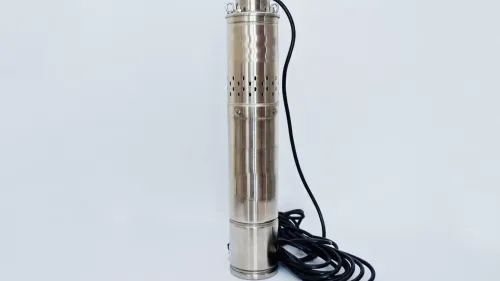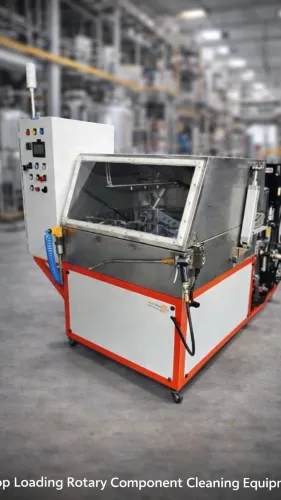
Medical molds collect polymer deposits, release-agent films, pigment, flash particles, scale and residues hidden inside vents, cavities and ejector-pin holes. By the end, you will be able to identify when ultrasonic cleaning is justified, specify a safe repeatable cycle, and compare equipment against manual, blasting, chemical and bench-cleaning alternatives.
Key takeaways
- Use ultrasonic cleaning for residue in blind cavities, vents, ribs and ejector-pin holes.
- Set frequency, temperature, chemistry, time and rinse controls for each mold material.
- Prove cleanliness with visual inspection, residue tests and recorded cycle parameters.
- Reject ultrasonic cleaning when the mold material, coating or contamination is incompatible.
Which Medical Molds and Contaminants Justify Ultrasonic Cleaning?
Ultrasonic cleaning earns consideration for injection molds producing syringes, IV components, diagnostic disposables, closures and medical-device housings. It is most valuable when residue spreads through blind cavities, vents, ribs or ejector-pin holes that a cloth or brush cannot reach consistently.
Match the contamination to the tooling feature: polymer deposits cling inside cavities; release-agent film coats polished steel; pigment and flash particles collect in parting lines; machining oil and polishing compound remain on surfaces; scale and rust staining develop around water paths. Trapped soil in vents and pin holes is the clearest warning sign.
| Option | Best fit | Limitation |
|---|---|---|
| Routine wiping and brushing | Exposed faces and light soil | Operator variability and missed blind features |
| Dry-ice blasting | Accessible polymer or surface deposits | Limited reach inside enclosed geometry |
| Soda blasting | Compatible substrates with controlled residue removal | Media residue and substrate damage require control |
| Chemical soaking | Compatible, heavy contamination | Chemistry, wastewater and material compatibility risks |
| Disassembly and bench cleaning | Inspection, repair or full access | Teardown cost, handling time and production loss |
| Ultrasonic cleaning equipment for molds | Distributed soil in delicate or blind geometry | Requires validated chemistry, loading and rinsing |
Choose ultrasonic cleaning when repeated teardown costs, lost production time and inconsistent operators exceed the process-development effort. Leaving release agent, oil or detergent behind can alter part release, appearance, adhesion or particulate cleanliness.
A medical manufacturing mold cleaner is a maintenance process, not a reason to clean every mold identically. Industrial mold cleaning equipment fits best within a defined pre-clean, ultrasonic wash, rinse, drying and inspection plan. Deep flash, corrosion products or mechanically bonded deposits may still require approved scraping or another pre-treatment.
How to Build a Safe Ultrasonic Mold-Cleaning Cycle
Build the cycle around controlled cavitation, not tank wattage alone. Ultrasonic cleaning equipment for molds transfers energy through the bath, but power density, degassing, detergent concentration, temperature, exposure time, orientation and loading determine whether soil is removed or damage begins.
1. Start development at approximately 20–40 kHz. Trial frequency, power density, temperature and exposure time on the actual mold, residue and finish; a catalogue setting is not a validated process.
2. Load the mold in a compatible basket or fixture, never directly on the tank floor. Specify basket dimensions, load limit, fixture material, tank-floor clearance and spacing between surfaces. Rotate the mold or change immersion orientation during the cycle because stacked parts create cavitation shadowing.
3. Use a controlled sequence: pre-clean, degassed ultrasonic wash, controlled rinse and filtered or HEPA-assisted drying when the risk assessment requires it. Set detergent concentration and bath temperature with measured limits, then control immersion time through a stored recipe.
4. Stop escalation when cleaning improves but the substrate changes. Excessive power, heat, chemistry or exposure can pit aluminum, discolor copper alloys, swell elastomers, damage seals, lift coatings, alter chrome or nickel, round parting lines, dull mirror finishes or erode textures and vent edges.
5. Test coupons or sacrificial parts before production. After repeated cycles, check critical dimensions, surface finish and coating condition, then confirm compatibility with mold steel, aluminum, copper alloys, nickel, chrome, elastomers and downstream medical-production requirements.
A medical manufacturing mold cleaner is safe only when the complete wash-rinse-dry cycle passes these checks, not when cavitation alone removes visible residue.
What Evidence Proves the Mold Is Clean and the Process Is Controlled?
A clean-looking mold is not proof of disinfection or sterilization. Ultrasonic cavitation removes soil; it does not automatically kill microorganisms, so biological soil requires a defined detergent, bioburden limit and downstream-control strategy. Set measurable acceptance criteria before qualification, not after buying a medical manufacturing mold cleaner.
1. Define visual cleanliness under specified lighting and magnification, particle limits, rinse-water conductivity or total dissolved solids, ionic or chemical-residue limits, and water-break behavior. Add a validated analytical method for detergent or process-residue carryover.
2. Challenge the hardest residue, longest permitted hold time and most difficult geometry, including vents, cavities and blind holes. Test changeover carryover into the next product, then demonstrate repeatability across cleaning runs.
3. Record the approved cleaning procedure; mold and batch or job identification; detergent lot and concentration; water quality; temperature; frequency; power; cycle time; load configuration; operator; equipment calibration status; deviations; before-and-after photographs; inspection results; and release decision.
4. Treat the ultrasonic wash as one stage in a defined pre-clean, wash, rinse, dry and inspection process. A complete industrial mold cleaning equipment system needs controlled rinse water and filtered or HEPA-assisted drying when the risk assessment demands it.
Use ISO 13485:2016 as a quality-system framework, not as proof that a mold is clean. If later inspection cannot fully verify the output, document process validation covering equipment qualification, operating limits, reproducibility, change control and continued monitoring. Requalify after detergent changes, repairs, new mold coatings or altered cycle settings.
What Should You Specify When Comparing Equipment in Coimbatore?
Specify the machine around the largest validated mold, not its advertised tank volume. For ultrasonic mold cleaning equipment for medical manufacturing in Coimbatore, request:
- Usable tank, basket and fixture dimensions, tank material, maximum load and floor clearance
- Frequency, controllable ultrasonic power, degassing and timer
- Heating range, temperature accuracy, alarms and recipe storage
- Filtration or oil separation, rinse stages and drying method
- Data logging, calibration access and operator safeguards
- Fixtures for multiple orientations, inserts, removable seals and separate ejector-component cleaning
A mold cleaning machine in Coimbatore that cannot accommodate the largest mold or prevent stacked surfaces from shielding cavitation will produce inconsistent results.
Compare the complete process, not ultrasonic wattage alone.
| Option | Compare | Failure if overlooked |
|---|---|---|
| Compact tank | Smaller footprint and load | Large molds need extra orientations or manual rework |
| Multi-stage system | Wash, rinse and controlled drying | Detergent, salts or particles remain on tooling |
| High-throughput system | Cycle time, loading effort and recipes | Capacity improves while wastewater and labour costs rise |
Test local hardness and dissolved minerals before specifying softened, RO or deionized final-rinse water. Select the treatment against your residue limit; hard water can reduce detergent performance and leave deposits.
Include detergent consumption, wastewater handling, ventilation, filter replacement and planned maintenance in the total comparison. Ask for a trial on the actual mold, cycle data and installation, training, calibration and service-response commitments. Mak Technosys belongs in the supplier comparison only when it documents that evidence for your quality system.
Local availability matters after process control, not before it.
When Is Ultrasonic Mold Cleaning the Wrong Investment?
A tank is a poor first investment when contamination sits on exposed surfaces, the mold exceeds a practical tank size, or the residue requires scraping rather than cavitation. Do not use ultrasonic cleaning as a substitute for preventive mold maintenance.
Reject the purchase if compatibility trials damage mold steel, aluminum, copper alloys, coatings, elastomers, seals or bonded assemblies. It is also the wrong process when the required outcome is sterilization: ultrasonic washing removes soil but does not sterilize tooling.
A hybrid plan can combine approved scraping or brushing, dry-ice treatment, chemical pre-cleaning, ultrasonic washing, controlled rinsing, drying and final inspection. Compare the full cycle, including teardown, transport, loading, washing, rinsing, drying, inspection, documentation, waste treatment and release back to production.
- Run a process-development trial before buying ultrasonic mold cleaning equipment for medical manufacturing in Coimbatore. Test the actual mold, worst-case residue, longest hold time and hardest geometry.
- Define pass-fail criteria in advance: visual inspection under stated lighting and magnification, particle or chemical-residue limits, rinse-water conductivity or total dissolved solids, water-break behavior, dimensional checks and surface-finish inspection.
- Specify the mold family, residue challenge, acceptable cycle time, maximum detergent chemistry and temperature, rinse-water quality, inspection method, required records, maintenance schedule and revalidation triggers.
Use the same evidence when comparing a mold cleaning machine in Coimbatore or other industrial mold cleaning equipment. A high-powered tank without those limits is an unqualified production shortcut, not a controlled maintenance process.
Frequently asked questions
Which medical molds and contaminants justify ultrasonic cleaning?
Use it for injection molds with residue in blind cavities, vents, ribs or ejector-pin holes. Typical targets include polymer deposits, release-agent films, oils and coolant residue.
How do you build a safe ultrasonic mold-cleaning cycle?
Define the mold material and contamination first, then control cleaning chemistry, bath temperature, ultrasonic frequency, exposure time, rinsing and drying. Keep a written cycle for each mold family.
What evidence proves a mold is clean and the process is controlled?
Keep mold identification, batch records, chemistry details, temperature and time readings, operator checks, rinse or drying records, and inspection results. Use residue testing when visual inspection cannot confirm cleanliness.
When is ultrasonic mold cleaning the wrong investment?
Choose another method when the mold has incompatible coatings or materials, contamination that the selected chemistry cannot remove, low cleaning frequency, or geometry that the tank cannot accommodate safely.